

In 2022, the average share price of an investment trust was trading at a 13 per cent discount to the underlying net asset value and that was considered wide compared to recent historical averages. By the end of March 2023, the discount for the sector had moved out to 17%.
In June* it was hovering around the 16% level – and in an environment with a scarcity of good news, that is viewed as a positive development! While the discount level has not come back in, it does at least seem to have stabilised.
Luxury brands help buoy Europe
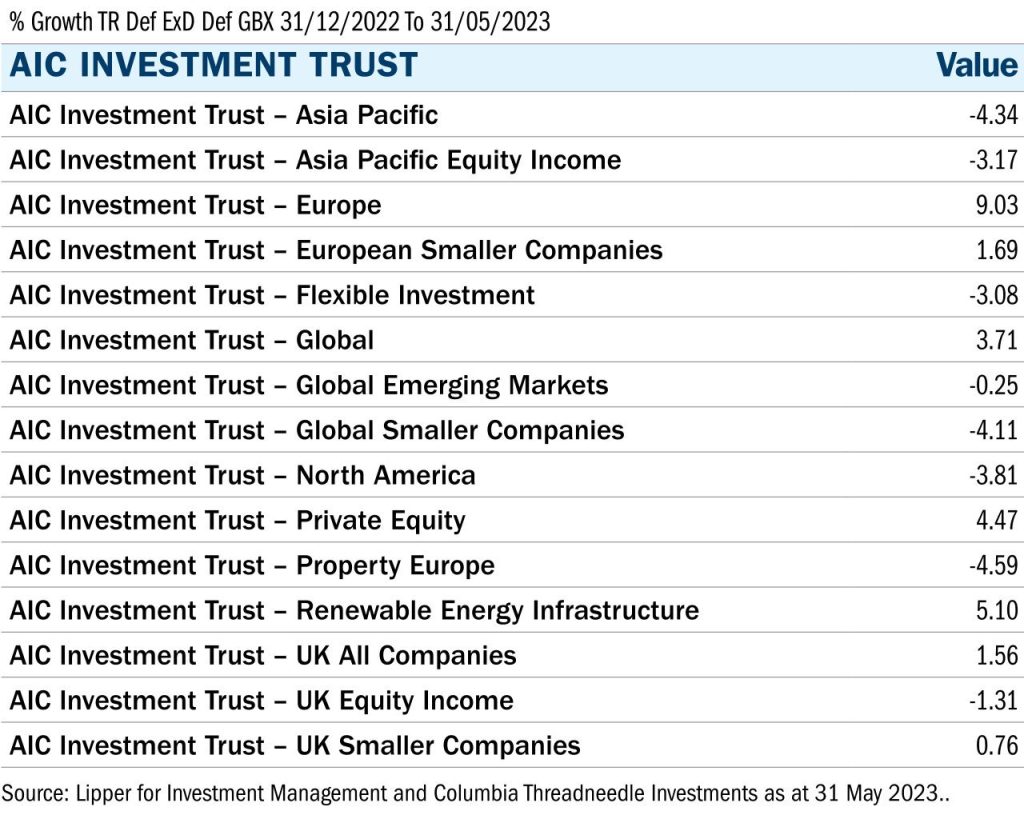
Within the Investment Trust universe, some sectors are faring better than others. Europe is the standout performer. Sentiment for European equities has been buoyed by the positive developments that followed the warmer than usual winter. The spike in energy prices did not have as severe an impact as had been feared and this in turn allowed household demand for other goods and services to maintain a more resilient footing than had been expected.
In addition, French luxury goods brands have continued to enjoy good performance, reporting buoyant demand from local and international consumers. Following strong first quarter 2023 results, shares in LVMH and Hermes hit record highs. As well as enjoying a bounce in demand after the Covid lockdowns, luxury goods groups have been in the privileged position of being more able to pass on higher prices to consumers without losing market share.
The UK equity market has had an altogether more difficult time and underperformed against the backdrop of an unhappy macroeconomic picture. After a series of 0.25% increases in interest rates, in June rates were raised 0.50%, to take the base rate to 5.0%. Expectations for peak rates are now steering towards 6% and there is a resignation that rates will need to stay higher for longer. People coming off fixed rate mortgages in the third and fourth quarter of this year face huge uncertainty and this is being reflected in the cap on flows to investment trusts and other stock market investments.
Property penalised by interest rate sensitivity
Unsurprisingly, Property is another sector that investors have penalised for its vulnerability to higher interest rates. Property portfolios also compete more closely with bonds as income investments and with two-year gilts breaching the 5% yield mark* in mid-June, for the first time in 15 years, property managers are facing stronger competition from low risk fixed income assets now presenting a credible income alternative.
Unfortunately, the next few months are going to remain challenging for Investment Trusts as UK households struggle through the rising cost of living, with sticky inflation and higher interest rates impacting everything from mortgages to wage negotiations and spending plans. In such an environment saving for the longer-term inevitably gets pushed down the priority list. With the peak of interest rates still in contention, discounts will remain wide and investors cautious about committing additional funds to investment.
*19 June 2023.