

There are a number of charges and costs that are incurred when investing. The charges that an investor pays are used to cover the costs of running the fund, including our charge for managing the fund, in addition to the costs of distributing it. The value of an investment will reflect these charges and will be lower as a result.
Charges vary from fund to fund and between share classes. Further information about specific charges can be found in the relevant Fund Prospectus and on the Funds and Prices page of our website where you can search for your fund by name/ISIN.
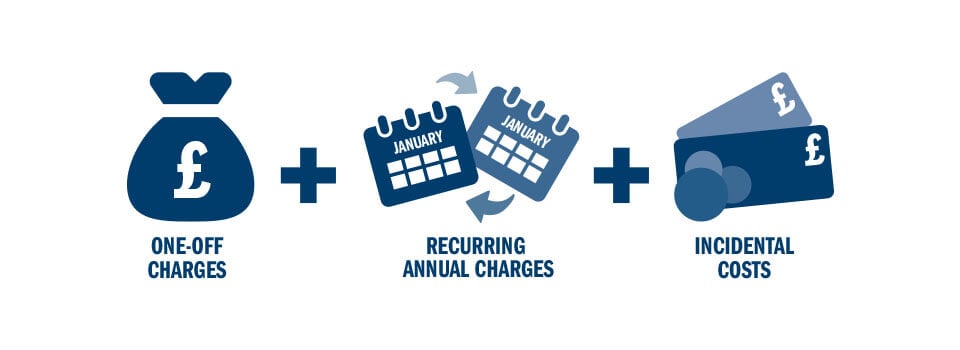
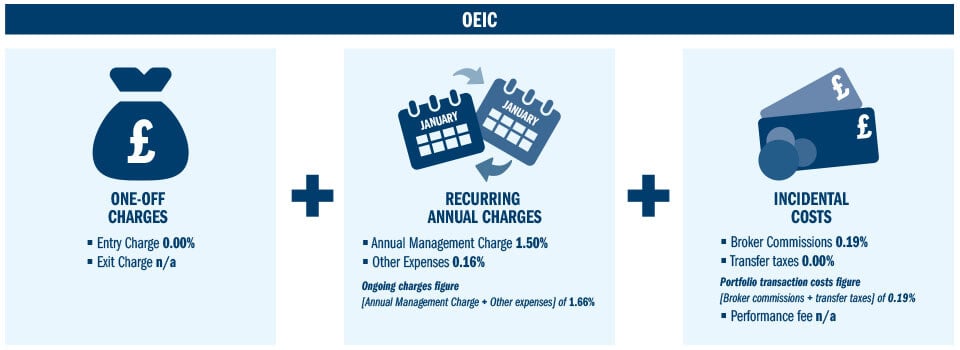
The total cost of your investment may comprise of the following:
Entry charge
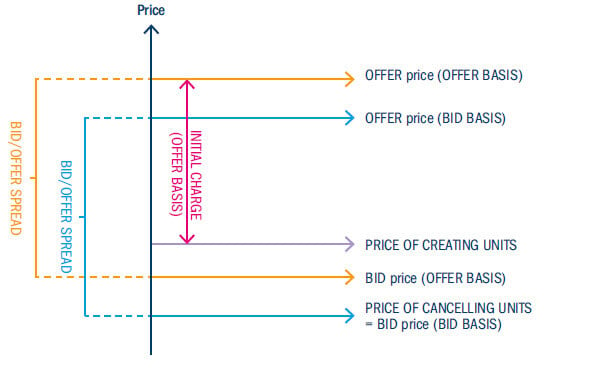
This is often referred to as an initial charge and is the maximum that may be taken from an investment before the deal is placed in your chosen fund.
For dual-priced funds, the initial charge is included in the price at which an investor buys into the fund, this is known as the bid/offer spread and is the difference between the quoted bid and offer prices.
Columbia Threadneedle Investments does not currently apply any entry charges on its UK domiciled fund ranges.
Exit charge
This may also be referred to as a redemption charge and relates to the amount of money thatmay be taken from an investment before the proceeds of your investment are paid out.
Columbia Threadneedle Investments does not charge exit fees.
Switching charge
This is a charge levied when an investor chooses to switch from one share class in a fund to another share class in the same fund.
Columbia Threadneedle Investments does not charge switching fees.
There are a number of charges and costs borne by the funds each year as described below. The Ongoing Charges Figure (OCF) is an industry standard way of measuring the aggregate effect of a number of these charges.
Ongoing charges figure (OCF)
The OCF is based on the last year’s expenses and may vary from year to year. It includes charges such as the fund’s annual management charge, registrar fee, custody fees and distribution cost but excludes the costs of buying or selling assets for the fund (unless these assets are shares of another fund)
The following form part of the OCF:
- Annual management charge
This is a charge paid annually to Columbia Threadneedle Investments for managing an investment in a fund. - Registrar fee
This is a fee paid in return for Columbia Threadneedle paying or satisfying certain ongoing registration and general expenses. At any particular time the actual amount of ongoing registration and general expenses may be more or less than Columbia Threadneedle Investments collects from the fund.
The following form part of the registrar fee:
- fees and expenses in respect of establishing and maintaining the register of Shareholders and related functions including the fees of the registrar;
- expenses incurred in distributing income to Shareholders;
- fees in respect of the publication and circulation of details of the Net Asset Value and prices;
- fees and expenses of tax, legal and other professional advisers of the Company;
- costs of convening and holding Shareholder meetings (including meetings of Shareholders in any particular Fund, and a particular Class within a Fund);
- costs of printing and distributing reports, accounts and any prospectus, publishing prices and any costs incurred as a result of periodic updates of any prospectus and any other administrative expenses;
- fees connected with the listing of Shares on the Stock Exchange; and
- Report & Account fees.
- Custody (Safe keeping) fee– fee charged by the Depositary and Custodian who are the legal owners of the fund’s property and are responsible for safe keeping of the assets.
- Custody transaction fee – transaction expenses incurred by the Depositary and Custodian who are the legal owners of the fund’s property and are responsible for safekeeping of the assets.
- Audit fee – fees and expenses of the funds’ Auditors.
- Regulatory fee – fees of the Financial Conduct Authority and the corresponding periodic fees of any regulatory authority in a country or territory outside the United Kingdom in which Shares are or may be marketed.
In addition, there are further incidental annual charges and costs that are not part of the OCF:
Portfolio transaction costs (PTC)
This includes the expenses that arise from selling or buying investments in the fund, including redemption fees, transfer fees and broker commissions. Costs for a property fund may be significantly higher than an equity or bond fund, due to the additional transaction costs associated with buying or selling property.
Please note that the Portfolio Transaction Costs likely to be incurred as a result of large subscription/redemption requests are factored into the Dilution levy/adjustment rates applied to these deals.
For funds that invest in other funds there will be costs associated with the underlying funds. For detail of how this works, please consult the Prospectus.
Property Expense Ratio (PER)
There are a number of costs related to running and maintaining property funds that are not covered as part of the Ongoing Charges Figure (OCF). These additional costs are grouped together to form the Property Expense Ratio (PER), which includes:
- Non-recoverable property management fees
- Service charge shortfalls and holding costs such as empty rates and security
- Rent review and lease renewal costs
- Maintenance and repairs (not improvements)
- Property insurance costs/rebates
- Amortised debt- financing fees/costs
- Debt valuation fees
- Marketing of vacant space
- Project management fees (where not capitalised)
The costs associated with the Property Expense Ratio apply to the following:
- Threadneedle UK Property Authorised Investment Fund (Threadneedle PAIF)
- Threadneedle UK Property Authorised Trust (Threadneedle PAIF Feeder Fund)
 For examples on the operation of Performance Fees for the applicable funds, please refer to the relevant Fund Prospectus.