


Top stories
- Last weekend’s peace talks between the US and Iran talks didn’t deliver a settlement, but dialogue is ongoing. President Trump said on Wednesday that the war was “very close to over” and suggested further talks would be taking place soon. Importantly, the ceasefire between the US and Iran is still holding and there are reports an extension is being discussed. Equity markets have reacted positively.
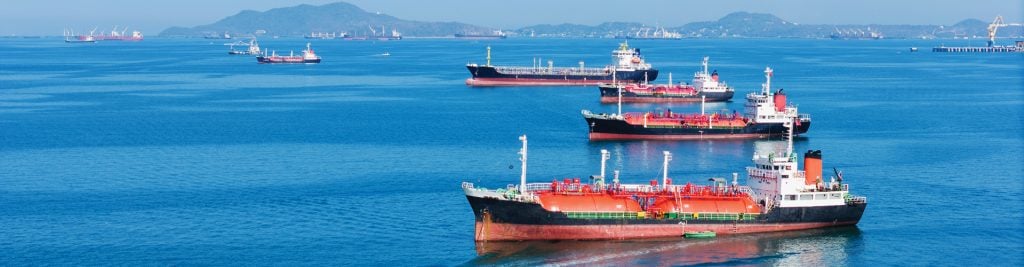
- In the aftermath of the peace talks President Trump announced a new policy of ‘blockading’ the Strait using at least a dozen US warships. This is a policy shift with the US having initially allowed Iranian oil to continue to end markets, predominately China. Iran protested what they see as an escalation aimed at causing economic pain.
- Financial markets saw a continued relief rally, which took the S&P500 index in the US above its closing level the day before the conflict began. It reached all-time highs on Wednesday and Thursday. Brent Crude futures fell back below $100/barrel. While futures prices eased, oil for immediate delivery traded above $140/barrel, highlighting the supply pressures that continue to build and could worsen as inventories of commodities exported from the Gulf are run down, with limited new supply on route to replace it. Trade body ACI Europe warned European airports are facing “systemic shortages” of jet fuel if the Strait of Hormuz is not fully reopened within three weeks.
By the numbers
3.1% – the global growth forecast for 2026 from the International Monetary Fund, a downgrade on their January forecast of 3.3%. The IMF noted that without the conflict in the Middle East, their forecasts would have been upgraded. Global inflation is expected to be 4.4% this year. For context, global growth last year was 3.5% with inflation at 4.1%.
3.3% – US inflation in March. The spike in inflation mirrors what we have seen in the eurozone, as rises in fuel prices impact the inflation data. US gasoline prices were up 21.2% month on month. Core inflation, which excludes food and energy prices, saw only a slight increase to 2.6% from 2.5% in February, suggesting higher energy prices are yet to pass through to the wider economy.
Market movers
- The US policy of blockading the Strait of Hormuz is designed to achieve the same goals as attacking or occupying Kharg Island, from which an estimated 90% of Iran’s oil is exported; the difference being this strategy could be ended rapidly, compared to any attack on energy infrastructure which cannot be ‘undone’ and risks retaliation and escalation.
The US clearly has military dominance in this conflict and is using their own ‘blockade’ of Iran-connected shipping to exert economic pressure. To this point in time, Iran has held the upper hand from an economic point of view thanks to their effective closure of the Strait and restrictions on safe passage only for vessels paying a fee to Iran. The fact Iran can exert such pressure through the implied threat to shipping in the Gulf saw their strategy described as a “weapon of mass disruption” by The Economist this week.
One of the ‘red lines’ for the US in the peace talks is free passage through the Strait, but in this respect the Iranian regime appears in no hurry to give up their primary tool of leverage.
- For financial markets, and particularly for oil prices, the critical question is which side has the greater tolerance for pain – Iran or the US? The longer that traffic through the Strait is disrupted, the greater the economic and pollical burden on the US and its allies. While equities may well have recovered much, and in some cases all, of their conflict related losses, the practicalities of reopening the Strait of Hormuz, post any agreement, will weigh on supply chains, and commodity prices, for some time.
The investment lens
- While equity markets appear to have concluded the war is ‘over’, commodity markets continue to reflect the stresses resulting from the disruption to shipping from the Gulf. With around 13 million barrels a day of oil missing from the market, European and Asian refiners are competing for the remaining available cargos of oil, which has driven spot prices to record highs this week. Dated Brent – oil for immediate delivery – normally trades within a few dollars of the forward price, but this week, as Brent futures traded around $95-99/barrel, Dated Brent was still trading over $140/barrel. The spread between prices highlights a market struggling to source immediate supply, even though futures prices suggest that scarcity will ease on the basis the conflict will conclude sooner rather than later.
- The economic impact of the conflict so far has been cushioned because large volumes of oil and gas from the Gulf were already in transit when the war began. With the last of those deliveries now being made, inventories are being run down, and while strategic reserves are not completely depleted, some fuels, such as diesel and jet fuel are starting to see shortages.
- Reopening the Strait of Hormuz will not return it to its pre-war status. Iran now knows how effectively they can weaponise the Strait giving them a strategic hold over the global economy. An increased US naval presence in the Strait will not immediately guarantee the safety of commercial shipping, and even if the number of mines laid by Iran is believed to be below 50, finding and destroying them will take time. In enforcing the closure of the Strait, Iran has not needed to attack every tanker. A few successful missile or drone attacks has been sufficient to dissuade most ships from attempting the voyage. With so many ships looking to leave the Gulf, it will take time for this ‘traffic jam’ to ease. Iran’s strategic advantage will weaken over time as Gulf countries will find bypass options. The strategic importance of the chokepoint will diminish over time but, in the short term, while the oil price may have eased, supply concerns remain elevated.
- The rebound in US equity markets reduces some of the pressure on President Trump to de-escalate the conflict. However, significantly elevated gasoline and diesel prices will maintain domestic pressure, not least with the midterm elections looming. The outcomes to this conflict are binary and there remains a choice for President Trump to escalate, risking a prolonged conflict, or to pursue diplomatic solutions via further talks and potentially an extension to the ceasefire. Equity markets are already moving on, having concluded the worst is already behind us, but supply risks for oil and other commodities still mean the Strait of Hormuz needs a solution soon.