We are living and investing in a very uncertain and constantly changing environment. Any views we put on paper can be redundant within a day or two as we see yet another set of extraordinary measures from governments and central banks to support the economy and businesses to get through this awful period and return to some level of normality. However, you as investors still want to be updated as frequently as possible and our aim as a multi-asset team and firm is to ensure we keep you abreast of what we are doing in the portfolio as often as possible, without overload.
As investors many of you are aware that we have had very little duration in the portfolio for a number of years now, rather investing our “dry powder” in light-duration assets such as short-term UK government bonds, cash and short-dated UK investment grade credit in the belief that these offer better protection than long-dated fixed income. This meant the duration of the Threadneedle Dynamic Real Return Fund at the end of January was 2.02 years1. The duration we have held has mainly been focused in US Treasury Inflation-Protected Securities (TIPS), where we have opportunistically taken allocations; firstly back in 2015, before exiting in early 2016, and re-entering in December 2016.
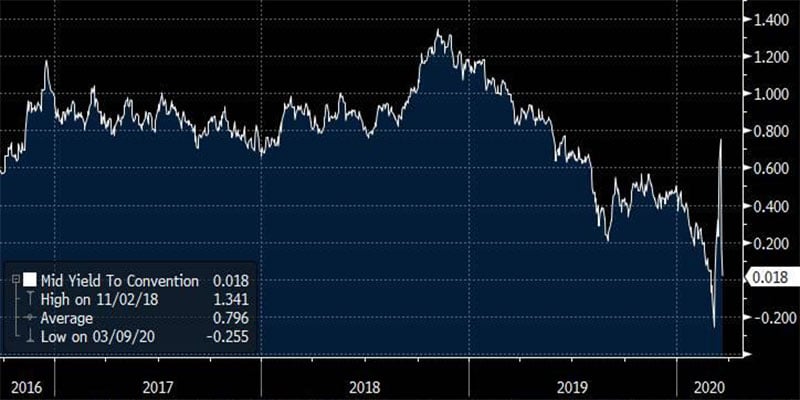
Our aim at that point was to build the allocation around the 1-1.2% and then we sold a portion of the allocation at 0.7%. Since the end of January 2020 where the allocation was 6.8% we halved the position at an average sale yield of around 0%. Post this, the US 10-year Treasury Inflation Index (TII) yields dropped to -0.51% before rising above 0.7%, then falling again. The cuts to US TIPS has meant that the overall duration of the Threadneedle Dynamic Real Return portfolio has fallen to 1.68 years2.
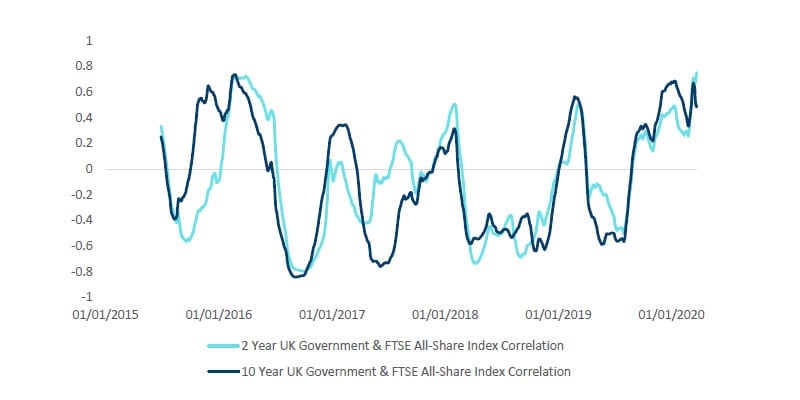
The moves we have seen in markets have been startling, but even more so the volatility we have seen in what is considered to be risk-free US government index-linked securities. This with the background of rising correlations across asset classes has meant that there are not many places to hide, so the traditional role of diversification of long-dated fixed income to equity holdings are challenged. This is a view we have held for some time, albeit we got here not through an expected route. Rather we look to use cash as the defensive position within the Fund (at the end of February we held over 20% of the Fund in cash and less than one-year UK government fixed income).