

Key Takeaways
- Developed countries across the world have experienced a strong rise in immigration.
- This increases the demand for housing and impacts rents.
- In the US rents are a big weight in inflation indices: 35% in the consumer price index.
- Rental inflation in the US is running at 6% a year and showing a tendency to accelerate.
- As a result, the pace and scale of rate cuts in the US might be smaller than previously forecast.
- The UK may see a similar but much smaller impact. And the Eurozone smaller still.
Developed countries across the world have experienced a strong rise in immigration of late. This has widespread social, political and economic effects but I want to focus on just one aspect – the impact on rents – that is relevant for inflation and the prospects for interest rates.
In last week’s Market Perspectives I argued that that the US Federal Reserve, the European Central Bank and the Bank of England would all cut rates in June. This week I suggest that rental inflation could limit the scale, pace and subsequent rate cuts, especially in the US. The UK might see a similar but much smaller impact, with the Eurozone smaller still.
Economists’ views differ regarding the effect of immigration on overall inflation, wages and unemployment. After all, migrants increase the supply of labour but they also increase demand. But there is one area where the impact would seem to be unambiguous: rents. In the US, rents matter a lot because they have a big weight in the indices: 35% in the consumer price index (CPI).
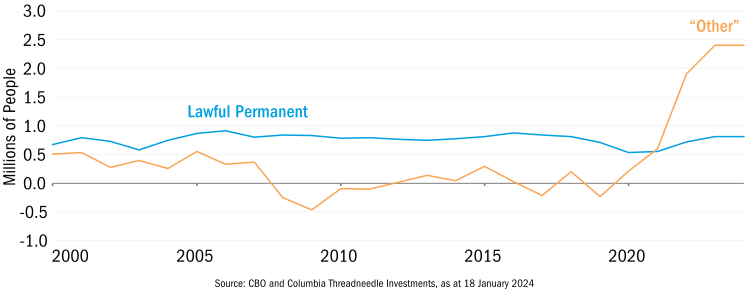
And immigration has surged in the US. The other category in the chart includes many things but it is dominated by unauthorised migrants. By their very nature statistics on unauthorised immigration are tricky but these figures come from the highly regarded Congressional Budget Office. And the numbers are huge and rising rapidly, to around 300,000 per month recently.
Many of these migrants are encountered by the US Border Patrol, released into the community and can work after several months. The migrants don’t have the resources to pay as much for housing as existing US citizens but they still increase demand and presumably push rents higher. Recent US inflation data has been disappointing with rents a big factor. Rental inflation is running at 6% a year and showing a tendency to accelerate, confounding many forecasters, including me, who expected the opposite.
The US CPI matters a lot for inflation expectations, cost of living adjustments and so forth. The Federal Reserve targets a different measure, the personal consumption expenditure deflater. That has a much lower weight, 18%, than the CPI. But that is still a big number. As other sources of inflation decline, the importance of rents increases.
Ultimately, rental supply in the US can increase to meet demand but this takes time. Let’s hope the data on the CPI and wages due this week are more encouraging but I’ll be paying attention to the glut of speakers from the Fed to see if any of them discuss this important topic.
By the way, the reason that the weight of rents (or shelter as they call it) is so much higher in US inflation measures is that they include owners’ equivalent rent, which is what home owners would pay if they rented from themselves. In my view, this has no place in a measure of inflation. A view shared by the stats authorities in almost every other country outside the US.
The UK has also seen a rise in immigration but unlike in the US the rise has been in legal immigration or at any rate, those authorised to work. We get a good idea of the scale from the National Insurance numbers issued to adults from overseas. These reached 1.1 million in 2022. At the time I thought this was one-off, a catch up from Covid, but last year saw another 1.1 million increase. These numbers are gross, some of the migrants may have returned home and there are other issues with the data but I reckon they are more accurate than most of the stats in this area.
As in the US, average rents paid take time to catch up with the market for new tenancies. Private rental inflation here is running at 6% much the same as in the US. The big difference is that the weight in the UK CPI is less than 8%, one quarter of the US weight. So they matter less. But rental inflation is accelerating more rapidly in the UK and the weight in the CPI is set to rise. There are many other factors beside migration at work. But the impact is smaller than in the US.
The Eurozone has a similar weight on rents to the UK but rental inflation is much lower there. Things could change but the impact on ECB policy and interest rates looks to be modest.
So what does all this mean? I still think inflation and interest rates are headed down. I still think that the big 3 central banks will all cut their rates by one quarter of one percent in June. But the pace and scale of subsequent cuts in the US might be rather smaller than I previously thought. We shall see.