GB
gb
GB
en-GB
gb_intm_classes
intm
Intermediary
en
en
For use by professional clients and/or equivalent investor types in your jurisdiction (not to be used with or passed on to retail clients).
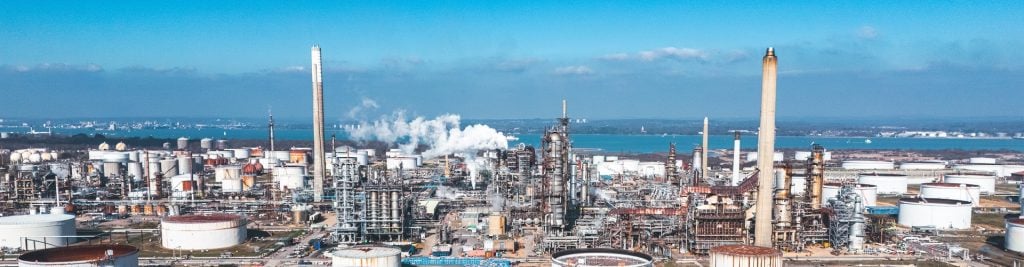
Panoramic view of a large industrial refinery with storage tanks, processing equipment, tall chimneys, and steam emissions, set against a blue sky and waterfront.

Market Perspectives: Why is oil stuck at $100/barrel?

Anthony Willis
Anthony Willis
Senior Economist, Multi-Asset Solutions team

Key Takeaways

  • Oil exports through the Strait of Hormuz have recovered to an estimated 85–90% of pre-conflict volumes, but prices remain elevated.
  • Supply-chain disruption, inventory rebuilding and renewed attacks on shipping continue to prevent a decisive normalisation in the oil market.
  • Uncertainty surrounding Iran and the Russia–Ukraine war leaves energy supplies exposed to further interruptions and geopolitical risk.
  • Constrained global refining capacity is keeping diesel and other refined-product prices high even as crude flows improve.
  • For investors, stronger physical supply is encouraging, but persistent bottlenecks and security risks are likely to sustain volatility and a substantial risk premium.

Oil markets have received some comparatively encouraging signals from the Middle East, but the improvement in physical supply has yet to translate into a decisive fall in prices. Shipping traffic through the Strait of Hormuz increased during September, with both visible and less readily tracked transits moving higher. Flows have recovered to an estimated 85–90% of pre-conflict volumes, helping to contain further upward pressure on crude prices.

However, restoring crude flows is only part of the challenge. Supply chains remain disrupted, while the rebuilding of inventories is sustaining demand. As a result, the recovery in exports has not produced a commensurate decline in oil prices. Renewed attacks on shipping in October, together with the first US retaliation over the weekend, also underline that the route back to normality is unlikely to be smooth.

The underlying dispute remains unresolved. Iran is seeking to impose its own terms on traffic through the Strait of Hormuz, while the US is pushing back. Although the increase in shipping volumes offers a plausible pathway towards more normal conditions, the recent escalation demonstrates that the risk of interruption remains material. The possibility of further US military action also means that investors cannot discount a renewed broadening of the conflict.

Developments in the Russia–Ukraine war add a second source of uncertainty. Reports of a potential ceasefire covering energy infrastructure would, if implemented, be constructive. Russia’s refining network has sustained significant damage from Ukrainian attacks, constraining the supply of refined products. Yet the latest reports appear to have surprised Ukraine, have not been confirmed by Russia and follow similar headlines in September that ultimately led nowhere. For markets, this argues for caution rather than an assumption of imminent relief.

The distinction between crude oil and refined products is particularly important. Pressure on refining capacity leaves diesel prices substantially higher relative to crude. US refineries are operating close to their limits, European capacity is constrained, Russian utilisation has fallen sharply and Middle Eastern refining remains disrupted by the conflict. Even if crude supply improves, bottlenecks in the refining system could keep diesel and other product prices elevated.

For the US administration, that creates an immediate political and economic challenge ahead of the midterm elections. Measures intended to ease the burden on consumers may provide some support, but they are unlikely to lower diesel prices materially in the near term. More broadly, the pressure is not confined to transport fuels. Continued disruption also affects liquefied natural gas, sulphur, fertiliser and other products that depend on secure regional trade routes.

Politically, the situation still resembles a stalemate. Negotiations may create scope for de-escalation, but Iran appears prepared to absorb economic pressure and pursue a longer-term strategy. The regime remains in place and has shown little willingness to concede on the negotiating positions discussed earlier in the year. That limits the prospect of a rapid diplomatic resolution and leaves energy markets exposed to further bouts of volatility.

The central message is that better shipping data should not be mistaken for a complete solution. Higher transit volumes through the Strait of Hormuz are a positive development, but fragile security, limited refining capacity and persistent geopolitical risk are likely to keep oil and refined-product prices elevated. At the same time, the global economy’s resilience and ability to adapt over the past two months have been encouraging. Markets may therefore continue to balance improving physical supply against a still-substantial risk premium.


Key topics

Subscribe to insights

Get the most out of your email by tailoring the types of insights and information you would like to receive from us.

Latest articles

Oil markets have received some comparatively encouraging signals from the Middle East, but the improvement in physical supply has yet to translate into a decisive fall in prices.
Government bond yields are rising again – but this is not simply a repeat of 2022. We consider what fiscal pressures, inflation uncertainty and higher borrowing costs could mean for bonds, equities and portfolio positioning.
Four factors are likely to have an important bearing on financial markets in the fourth quarter of 2026: US politics, fiscal policy in the UK and France, developments involving Iran, and the corporate earnings outlook.
Key topics
Related topics

Sign up to receive insights, information and reporting

Thank you. You can now visit your preference centre​ to choose which insights you would like to receive by email.

Risk Disclaimer

The value of investments and any income derived from them can go down as well as up as a result of market or currency movements and investors may not get back the original amount invested.

Views and opinions expressed by individual authors do not necessarily represent those of Columbia Threadneedle.

Important information

Columbia Threadneedle Investments is the global brand name of the Columbia and Threadneedle group of companies.

For professional investors only.

This financial promotion is issued for marketing and information purposes only by Columbia Threadneedle Investments in the UK.

The Fund is a sub fund of Columbia Threadneedle (UK) ICVC III, an open ended investment company (OEIC), registered in the UK and authorised by the Financial Conduct Authority (FCA).

English language copies of the Fund’s Prospectus, summarised investor rights, English language copies of the key investor information document (KIID) can be obtained from Columbia Threadneedle Investments, Cannon Place, 78 Cannon Street, London, EC4N 6AG, email: [email protected] or electronically at www.columbiathreadneedle.com. Please read the Prospectus before taking any investment decision.

The information provided in the marketing material does not constitute, and should not be construed as, investment advice or a recommendation to buy, sell or otherwise transact in the Funds. The manager has the right to terminate the arrangements made for marketing.

Financial promotions are issued for marketing and information purposes; in the United Kingdom by Columbia Threadneedle Management Limited, which is authorised and regulated by the Financial Conduct Authority; in the EEA by Columbia Threadneedle Netherlands B.V., which is regulated by the Dutch Authority for the Financial Markets (AFM); in Switzerland: Issued by Threadneedle Portfolio Services AG, Registered address: Claridenstrasse 41, 8002 Zurich, Switzerland. In the Middle East: This document is distributed by Columbia Threadneedle Investments (ME) Limited, which is regulated by the Dubai Financial Services Authority (DFSA). For Distributors: This document is intended to provide distributors with information about Group products and services and is not for further distribution. For Institutional Clients: The information in this document is not intended as financial advice and is only intended for persons with appropriate investment knowledge and who meet the regulatory criteria to be classified as a Professional Client or Market Counterparties and no other Person should act upon it.

Emirates Stadium Universal Conference:
Active Partnership in Action: Building the Right Blend

Join us at the Emirates Stadium for an exclusive adviser event exploring how market insight, investment expertise, technology and partnership can help build stronger client outcomes.
Thursday 26 November 2026

Thank you. You can now visit your preference centre​ to choose which insights you would like to receive by email.

Thank you. You can now visit your preference centre​ to choose which insights you would like to receive by email.