


We are always searching for opportunities to align financial and environmental outcomes. Biodiversity Net Gain legislation is one such investable opportunity, linking ecological restoration with durable, policy-supported returns.
The UK is undergoing a significant shift in how nature is valued. Historically treated as an externality – important but rarely priced – environmental outcomes are now being formalised through regulation and market mechanisms. This reflects a growing recognition that public funding alone has been insufficient to halt biodiversity decline, and that private capital can help scale restoration.
Biodiversity Net Gain
At the centre of this transition is natural capital: the idea that environmental outcomes such as biodiversity improvements, carbon sequestration and nutrient reduction can carry financial value. In the UK, Biodiversity Net Gain (BNG) provides a clear example. Through our investment in Carlshead Farm in North Yorkshire, we are entering a market where low-grade agricultural and surplus land can be repositioned as biodiversity-generating infrastructure.
Introduced in 2024, BNG requires most developments to deliver a minimum 10% biodiversity uplift relative to pre-development conditions. Where this cannot be achieved onsite, developers must purchase biodiversity units from nearby habitat creation projects in England. This creates a clear, policy-driven source of demand: environmental delivery is no longer discretionary, but a mandated requirement of development. The result is a direct link between environmental restoration and economic growth.
Establishing the investment case
BNG represents a reallocation of capital towards environmental infrastructure and a redefinition of land as an asset class. Rather than being valued solely on agricultural productivity or development potential, land can now be assessed on its ability to deliver ecosystem services.
Natural capital assets share characteristics with traditional infrastructure: upfront investment, long-term stewardship and contracted income streams tied to measurable outcomes. This translates into attractive portfolio characteristics:
- Biodiversity units are legally underpinned by habitat management agreements lasting 30 years or more, offering long-duration cashflows comparable to infrastructure.
- Revenues are driven by regulatory demand rather than discretionary spending, with potential inflation linkage given the real asset base.
- Return drivers are differentiated – linked to environmental policy and ecological scarcity rather than traditional economic cycles – providing diversification benefits.
Thus, BNG creates an opportunity for investors to access long-term, policy-supported revenue streams linked to ecological outcomes.
Pricing power
BNG pricing reflects ecological factors and local supply-demand dynamics. Units are based on a standardised biodiversity metric covering habitat type, condition, distinctiveness and location, but prices are negotiated according to unit availability, proximity to development and the complexity of habitat creation. Where development pressure is strong and supply limited, this can support pricing power for well-positioned habitat banks, particularly those delivering higher-value or “rare” habitats.
Execution is not without complexity. BNG is ‘early stage’ and investors need to assess regulatory requirements, habitat delivery risk, counterparty demand and long-term stewardship obligations. However, the direction of travel is clear: sustainability is increasingly translating into cashflow.
Over time, BNG can also be “stacked” when a habitat has reached its target condition and can evidence additional nature uplifts. This means the same piece of land could deliver more than one BNG unit. BNG can also sit alongside other environmental revenues such as carbon and water, supporting more diversified return streams.
BNG therefore offers an early but structurally supported opportunity combining policy-driven demand, long-duration income and measurable impact.
Case study
Carlshead Farm – a practical entry point into natural capital
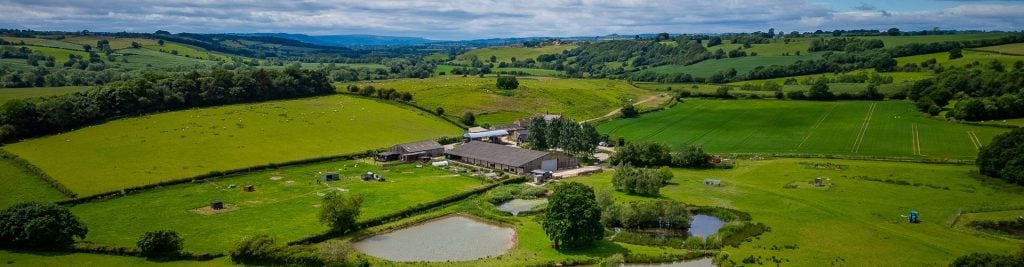
Carlshead Farm shows how this investment thesis can be implemented. Located near Wetherby in North Yorkshire, the 491-acre estate comprises predominantly Grade 3 farmland, alongside smaller areas of higher-quality land, woodland, ponds, a 110-acre floodplain and a minor Site of Special Scientific Interest.
The core strategy is to reposition the farm as a large-scale natural capital asset focused on habitat restoration and the creation of a BNG habitat bank. The farm will enter a conservation covenant, securing biodiversity delivery for 30-plus years and enabling registration on the national BNG registry. The scheme is expected to generate approximately 984 biodiversity units across 365 acres, delivering anticipated revenues of around £17 million over 10 years.
The site is well suited to this transition given its scale, proximity to development pressure, constrained existing supply of biodiversity units and capacity to deliver higher-value “rare” habitats. The feasibility of carbon and other forms of nature credits will be explored in the next 18 months.
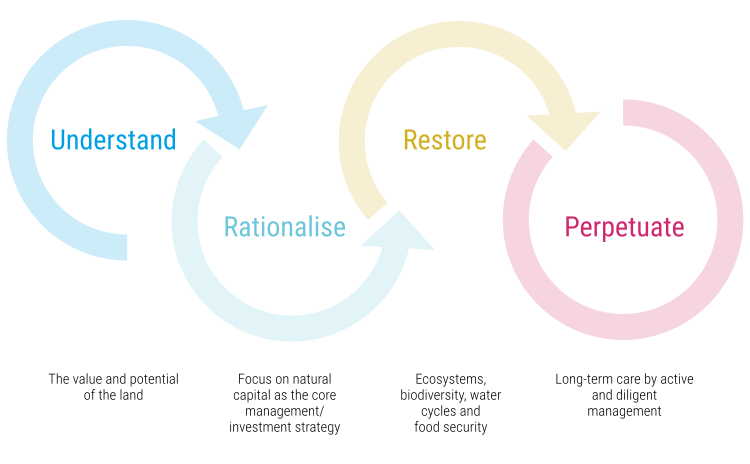
The circa £6 million acquisition price is underpinned by residual agricultural land value and existing income, providing a degree of capital preservation. An operational partnership has been agreed with specialist natural capital manager NatureReturn, who will oversee habitat design (Figure 1), regulatory compliance and market engagement.
Figure 1: NatureReturn asset management approach
Source: NatureReturn
Base case modelling suggests a low double-digit unlevered IRR, with upside under stronger pricing scenarios and resilience supported by the underlying land and income profile.
The bottom line
BNG marks an important shift in how nature is valued, transforming environmental outcomes into investable, policy-backed returns with a clear link between development and restoration.
Carlshead illustrates how natural capital can move from policy concept to real asset investment. It combines stable income, capital backing and exposure to a market where demand is structurally supported and supply remains constrained. In doing so, it demonstrates how investing in nature can align financial returns with measurable environmental outcomes.