

Key Takeaways
- Talk of early 2024 US rate cuts, which spurred a strong rally in bonds and equities globally, has seen a significant reversal.
- In the US, near-term measures of consumer price inflation are at or close to target and wage inflation is slowing. But monetary policy is restrictive and with a Presidential election looming, the Fed is mindful about a decision on rates becoming a political issue.
- In Europe, price inflation fell steeply towards the end of last year to well below the ECB’s forecasts. But the outlook for wage inflation is cloudy.
- The outlook for wage inflation is equally murky in the UK and the 10% hike in the minimum wage in April could add to upward pressure. The prospect of big tax cuts in the March budget also urges caution.
- We still expect big rate cuts this year and with the BoE probably the last to make the first cut.
The money markets have been whipsawed by central bank speak. On 13 December last year, the Chair of the US rate-setting committee electrified the markets with talk of early US rate cuts. A strong rally in bonds and equities followed, not just in the US but in most of the world. Expectations of hefty and early rate cuts were then priced into markets in New York, London, Europe and beyond.
2024 has seen a significant reversal. Central bankers in those three centres have consistently pushed back on optimistic market expectations for rate cuts. So where are we left?
Although the themes of falling inflation and low unemployment are common across the US, UK and Europe, important differences remain when it comes to the timing of rate cuts.
In the US, near term measures of consumer price inflation are at or close to the 2% target. Slowing wage inflation suggests that this move can be sustained. Politics is also playing a role. With the most divisive Presidential election in modern times in prospect, the Federal Reserve (Fed) does not want its decisions on interest rates to be an issue.
Making the first cut in March would help in that respect. But it needs to be justified. The employment cost index, due out at the end of the month will be important here. It is generally regarded as the best measure of wage growth, it only comes out quarterly and a move below 1.0%, quarter-on-quarter may just tip the balance towards a cut in March.
With unemployment low and the economy growing steadily, there is no urgency to cut rates from this side. But monetary policy is restrictive and a modest cut in the spring would help to de-politicise subsequent decisions. Ultimately, we expect steady rate cuts in the US, towards the market’s expectation of 4%, by year end and beyond.
Over in Europe, price inflation fell steeply towards the end of last year, well below the European Central Bank’s (ECB) forecasts. But the outlook for wage inflation is more cloudy. The wage round has just kicked off and although there are good reasons for expecting a big slowdown in wage growth, the ECB will want to wait to see the results themselves. A rate cut in April is a distinct possibility but they may wait until the meeting in June.
The outlook for wage inflation is equally murky in the UK. Yes, near term measures of wage inflation show a big slowdown but from a very high level. Moreover, the 10% hike in the minimum wage in April could put upward pressure on wages.
The Low Pay Unit, which comes up with the numbers, did a good job of convincing many that the increase would have only a limited effect as wages, notably in retailing, had already risen above the new minimum. Sainsbury’s 9.1% wage award, announced a few days ago, suggests otherwise. The prospect of big tax cuts in the March budget – we expect 2p off the basic rate of income tax and a rise in thresholds – will also encourage caution.
Despite all this, we expect the Bank of England to follow the Fed and the ECB with big rate cuts this year …they will probably be the last to make the first cut though.
Shipping costs have jumped
US$ per 40 foot container
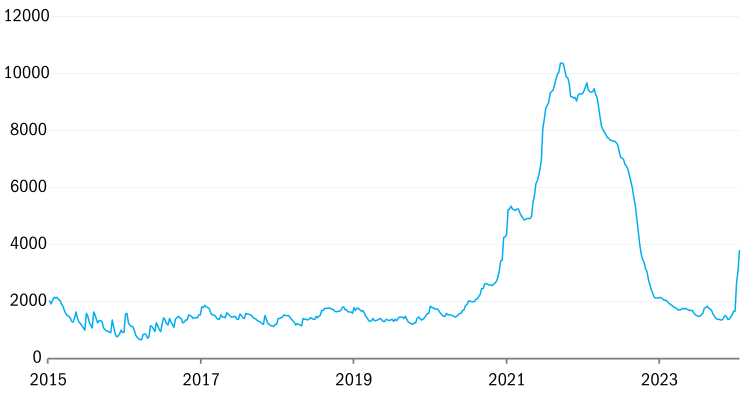
Source: Bloomberg and Columbia Threadneedle Investments as at 22 January. Drewry world container index, an average of 8 east-west route for 40 foot containers
What about the rise in shipping costs as a result of the problems in the Red Sea? Won’t that cause a resurgence in inflation and stop rate cuts? Yes, shipping costs have jumped but the scale is much less than in the aftermath of lockdown. There’s another important difference. Back then, businesses were scrambling to rebuild inventory and strong demand made it easy to pass on higher prices. It’s a different story today. So I do expect an impact but it is likely to be modest. And let’s hope it’s temporary
We shall see.