

Key Takeaways
- A rally in risk assets coupled with slowing jobs data prompted a more dovish assessment of US prospects from Fed Chair Jay Powell, with no further rate rise expected
- The European Central Bank also had good news on the inflation front, leaving the Bank of England as somewhat of an outlier with the highest wage and price inflation of the three
- The BoE is struggling to gather sufficient data on the labour market to accurately gauge the impact of rate rises
- Although headline inflation in the UK is set to fall, aggregate demand could well look firmer over the next few months, and real incomes rise
- If the BoE holds its nerve over winter, it might well deliver a soft landing. But the MPC could waver and instead usher in a bumpier trajectory
Last week saw a major rally in both equities and bonds. It gained impetus on Thursday when the Chair of the US Federal Reserve, Jay Powell, surprised markets by giving a dovish assessment of the prospects for US interest rates in his press conference, welcoming the progress made on inflation.
This favourable approach contrasted with the no-change statement prepared earlier by the whole rate-setting committee. The following day the crucial US employment report showed a major slowdown in job growth and a further rise in unemployment. The Administration gets these figures before publication and we suspect they briefed Powell in advance of his press conference – hence his change in tone. The market has now all but abandoned fears of another US rate hike and is factoring in a full 1 percentage point cut in rates in 2024.
The European Central Bank also got some good news last week with a steep fall in inflation. This leaves the UK as the outlier with the highest rate of both wage and price inflation (see chart).
Inflation US, EZ and UK
Consumer price inflation % year on year
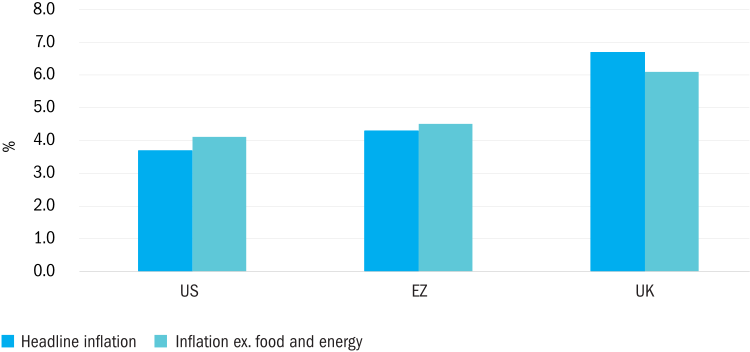
Source: Columbia Threadneedle Investments and Bloomberg as at 20 October 2023.
Central banks always face a dilemma at this stage of the cycle: raise rates too fast and risk pushing the economy into recession; raise them too slowly and risk inflation staying too high. This makes it essential to have good information on the overall economy. Yet the UK Office for National Statistics has been forced to suddenly abandon its key numbers on the labour market. The problem is the low response rate to its labour force survey. Having given up face-to-face interviews during the Covid pandemic it is finding it hard to get people to respond when telephoned. The main statistics on wages, employment and unemployment are no longer available. So, at this crucial juncture the Bank of England (BoE) is flying blind.
All is not lost, however. We have other ways to measure employment and unemployment and, while each has its own problems, they are in my opinion timelier and more accurate than the ill-designed labour force survey. The message from these data and the various private sector surveys is that the labour market is cooling rapidly. Measuring wages is more difficult, however, and on this matter the BoE have to take a leap of faith that a softer labour market will bring wage inflation – and hence price inflation – under control.
The next few months could prove especially difficult. On the positive side, headline inflation is set to fall rapidly from the current rate of 6.7% towards 4% by Christmas. Core inflation should also edge lower. So, Prime Minister, Rishi Sunak, looks set to meet his promise to halve the rate of inflation. But aggregate demand could well look firmer in the next few months as government social security payments boost incomes. Despite the squeeze from higher mortgage rates, real incomes are set to rise significantly and that should translate straight into stronger spending.
Three members of the BoE’s Monetary Policy Committee voted to raise interest rates at last week’s meeting. It would take only two of the remaining five members to join them for a further hike in the Bank Rate.
So, interest rates in Europe and the US look to be firmly on hold; UK inflation is headed lower. The loosening in the UK labour market should lead to a significant reduction in wage inflation in the UK in the crucial period next spring when most wage settlements are reached. Provided the BoE holds its nerve over winter, Bank Rate should fall significantly in 2024. This would amount to a soft landing. But in the absence of decent data on the labour market the BoE will be flying blind and may deliver an unnecessarily bumpy one. I’m keeping my fingers crossed that all will be well. We shall see.