
de
DE
Germany
de-DE
de_intm_classes
intm
Intermediary
de
de
Insights

European Utilities: as good as it gets…

We recently held our annual European Utilities Roundtable – assessing sector fundamentals against the economic, regulatory, and political backdrop. We improved the sector fundamental score from Neutral to Positive.

After Covid, facilitating the Energy Transition from fossil fuel dependence to renewables in line with Net Zero targets was to be the backbone of economic growth in the European Union (EU). Following the invasion of Ukraine and the consequent gas crisis in Europe in 2022, we found the sector’s already defensive characteristics underpinned further by higher political and regulatory support. Why? Because the EU is keen to ensure the security of energy supplies, with concerns over gas shortages, affordability and systemic risk moving front and centre.

Gas prices moderating
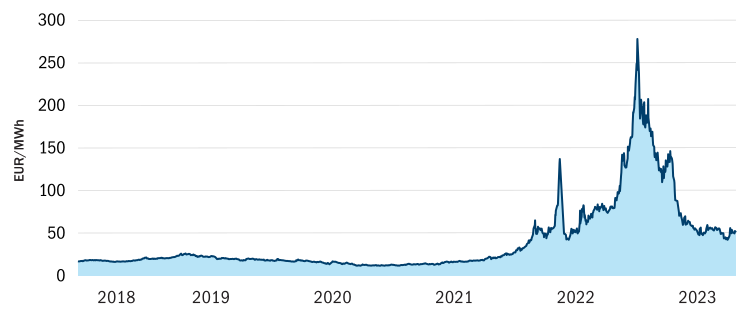

Source: Bloomberg

New levels of government intervention are unprecedented. The EU has loosened restrictions on State Aid rules leading to direct government support in the form of either equity injection or more State ownership of critical infrastructure, notably in the Netherlands and Germany. The EU is also forcing local authorities to find ways to reduce the planning permission process for renewables developments from 6-10 years to 2-3 years. Additional major initiatives are in play on both sides of the Atlantic in a bid to attract investments and secure supply chains. In Europe for example, RePowerEU is a European Commission proposal to end reliance on Russian fossil fuels by 2030; the EU Power Market Reform seeks to reduce energy price volatility as well as create favourable conditions for investment in low-carbon energy.  The US’s Inflation Reduction Act has also forced the EU to re-consider ways to encourage European Utilities to invest in Europe rather than taking advantage of attractive returns in the US, potentially through the Net Zero Industrial Act.


Electricity networks are increasing in strategic importance to facilitate the security of supply and decarbonisation targets. Regulatory mechanisms continue to work as expected, with regulated utilities being allowed to pass through inflation in rates and costs to end-users. Inflation is positive for the growth in value of networks assets and higher allowed returns on investments, ie better remuneration. Regulators are also adopting a more flexible approach, so electricity network operators will be incentivised to connect renewables sources to the grids sooner than before.

Capital expenditure is therefore increasing but financial strength is mitigated by future earnings before interest, taxes, depreciation, and amortization (EBITDA) growth and conservative balance sheet targets.


In terms of energy supply, the EU has now good gas storage ahead of Winter 2023 potentially hitting a target of 90% this Autumn, all things being equal. This has been attributed to a warm winter, lower demand and higher LNG imports replacing Russian gas. Commodity price volatility is therefore falling but electricity prices remain elevated versus historic levels. This is positive for utilities with merchant generation exposure.


Whilst we see plenty of reasons to be positive, we are also cognisant of risks to our thesis. Continued fall-out from military conflict remains an obvious one, and the extent of this together with the rapid pace of structural reform across the European Union has the potential to create uncertainty; unintended consequences need to be monitored. Weather-related risks will be ongoing and there is scope for project costs to be impacted by supply chain constraints. We are already seeing multi-year lead times for the delivery of transformers, shortages of skilled labour and squeezed supply of raw materials like copper and lithium.

Clean energy supply chains dominated by China
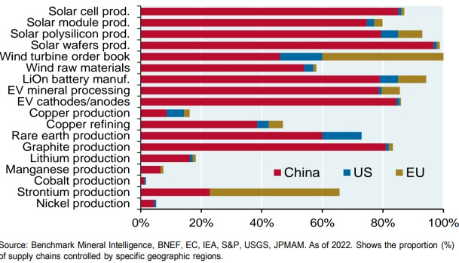
Source: JP Morgan, European Utilities, Mid-Year 2023 Credit outlook

On balance, we continue to like the defensive characteristics of the utilities sector, and within it prefer regulated electricity transmission and distribution names. The gas crisis in 2022 forced the EU into making faster decisions around energy-related infrastructure and their efforts have been focused further with competition for investments from the US’s Inflation Reduction Act.


10 Juli 2023
Sharon Vieten
Sharon Vieten
Investment Grade credit analyst, Fixed Income
Share article
Hauptthemen
Verwandte Themen
Listen on Stitcher badge
Share article
Hauptthemen
Verwandte Themen

Important information

The research and analysis included on this website has been produced by Columbia Threadneedle Investments for its own investment management activities, may have been acted upon prior to publication and is made available here incidentally. Any opinions expressed are made as at the date of publication but are subject to change without notice and should not be seen as investment advice. Information obtained from external sources is believed to be reliable but its accuracy or completeness cannot be guaranteed.

Verwandte Beiträge

2 Dezember 2025

In Credit Weekly Snapshot – Tired of waiting for you

The European Central Bank is contending with increased fiscal spending and a massive shift in the Dutch pension system, leaving markets seeking clarity. Read on for a breakdown of fixed income news across sectors and regions.
25 November 2025

In Credit Weekly Snapshot – Tiptoe through the tulips

Is 21st century crypto akin to 17th century Holland? Are we seeing the madness of digital crowds? The Bitcoin price could suggest so. Elsewhere, government bond yields are tracking down in anticipation of further monetary policy easing. Read on for a breakdown of fixed income news across sectors and regions.
20 November 2025

Ed Al-Hussainy

Portfolio Manager

Gene Tannuzzo

Global Head of Fixed Income

Ausblick 2026 für festverzinsliche Wertpapiere: Chancen in einem Zinssenkungszyklus nutzen

Anleger in festverzinslichen Anlagen sind mit fallenden Zinsen, engen Spreads und einem fragilen Arbeitsmarkt konfrontiert. Das Playbook erfordert, Renditen festzuschreiben und die Duration zu steuern, während man bei der Kreditqualität wachsam bleibt.
9 Dezember 2025

Christine Cantrell

Head of EMEA Active ETFs and Investment Trust Distribution

Redefining quant – putting active into ETFs

Not all active ETFs are created equal. Explore how we’ve hardwired conviction investing into our portfolios.
8 Dezember 2025

Anthony Willis

Senior Economist, Multi-Asset Solutions team

Weekly Perspectives: What happens when Japan hikes rates?

This week we take a closer look at Japan and the likelihood of an interest rate hike at the end of December.
5 Dezember 2025

Iris Schöberl

Managing Director Germany, Columbia Threadneedle Real Estate

Immobilien sind zurück

Warum jetzt die Zeit ist, Immobilien in Betracht zu ziehen.
true
true

Important information

The research and analysis included on this website has been produced by Columbia Threadneedle Investments for its own investment management activities, may have been acted upon prior to publication and is made available here incidentally. Any opinions expressed are made as at the date of publication but are subject to change without notice and should not be seen as investment advice. Information obtained from external sources is believed to be reliable but its accuracy or completeness cannot be guaranteed.

Das könnte Ihnen auch gefallen

Investmentansatz

Teamwork bildet eine wichtige Grundlage unseres Anlageprozesses, der so strukturiert ist, dass er die Ausarbeitung, Bewertung und Umsetzung fundierter und vielversprechender Anlageideen für unsere Portfolios erleichtert.

Fonds

Columbia Threadneedle Investments bietet eine umfangreiche Palette von Investmentfonds an, die eine Vielzahl von Anlagezielen abdeckt.

Anlagekapazitäten

Wir bieten eine breite Palette aktiv verwalteter Anlagestrategien und -lösungen für globale, regionale und inländische Märkte und Anlageklassen.

Bitte bestätigen Sie einige Angaben zu Ihrer Person, um Ihr Präferenzzentrum zu besuchen

*Pflichtfelder

Etwas ist schief gelaufen. Bitte versuche es erneut

Vielen Dank. Sie können jetzt Ihr Präferenzzentrum besuchen, um auszuwählen, welche Einblicke Sie per E-Mail erhalten möchten.

Um zu sehen und zu aktualisieren, welche Erkenntnisse Sie von uns per E-Mail erhalten, besuchen Sie bitte Ihr Preference Center.