In recent decades, capitalism’s focus has become one dimensional: to generate financial returns for shareholders with little to no accountability of a corporate’s impact on society and the environment. However, more corporates are broadening their “purpose” to include the impact their operations and products have. This has been referred to as “responsible capitalism”, where all stakeholders are considered in the running of a business – employees, customers, suppliers, communities and the environment, not just shareholders.
In contrast, we’ve seen price gouging of goods such as hand sanitiser and face masks, which surely shows the worst in companies attempting to take advantage of public fear. Amazon has removed 500,000 items due to “Covid-based price gouging” and suspended 6,000 accounts for breaching fair pricing policies.5 Another clear example showing the best and worst of companies can be seen in Western apparel brands. These companies have a responsibility for millions of factory workers in countries such as Bangladesh and India, and during this crisis should be honouring existing orders. But many have not done this, meaning suppliers unable to bear the financial burden have had to lay off or suspend millions of workers, often without pay and severance, pushing an already precarious group to greater economic vulnerability. We are pleased to see that the companies held in GSO, such as Adidas, are honouring their commitments as tracked by the Worker Rights Consortium.6
Ecolab has also demonstrated its commitment to its employees. Executives have taken pay cuts in order to supplement sales teams’ incomes, some of whose customer base (restaurants and hotels) are in complete lockdown leading to a collapse in new business. This is something that could cause financial ruin when typical sales team salaries are 50% commission based.
Another tool used to boost shareholder returns, and in turn management incentives, are share buybacks. Companies have previously done this even if it meant sacrificing business investment or leveraging corporate balance sheets to do so. However, as government funds are being deployed to save companies, such practices are coming under increased scrutiny. Indeed there has been political commentary on why this may be regulated going forward, such as this from Chuck Schumer, a US Democrat leader: “One of the reasons industries are so short on cash right now is that they have spent billions buying back their own stocks instead of investing in their workers and saving for a rainy day. That needs to be addressed NOW.”7
The actions taken by companies over this period – to support employees, customers, suppliers and local communities – show a new type of responsible capitalism. It also shows an understanding that by looking after the surrounding community, despite potential short-term costs, they strengthen their corporate landscape in the future. As long-term investors, actions like these give us confidence that the companies we invest in are likely to weather the storm.
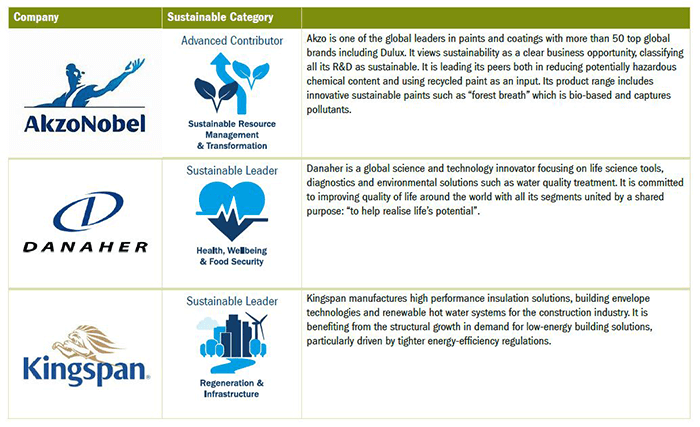
Source: Columbia Threadneedle Investments analysis/internal reports, 28 April 2020. The mention of any specific shares or bonds should not be taken as a recommendation to deal. All intellectual property rights in the brands and logos in this slide are reserved by the respective owners.