
In building up a savings pot for the future, you have three possible levers to pull. The first is to save more, but many people have competing demands on their finances. The second is to save for longer, but not everyone has time on their side. The third is to invest better. Investing for growth may be the readily available option to boost your long term savings.
Saving is hard enough without trying to do it with one hand tied behind your back. It is tough to build wealth over the long-term relying solely on low-risk, low growth assets such as fixed income or cash. Those with more than five years to invest usually have time to ride out the volatility associated with stock market investment to harness the higher potential growth it offers. The returns from global stock markets have historically been higher than for other asset classes1, and some risks can often be mitigated through robust diversification across sectors and regions, and through careful asset selection.
The compounding effect of just a few percentage points of additional growth each year can make a huge difference over the longer-term. Over a year or two, investors may not notice the impact of a percent or two, but after 25 years, the effect can be significant. A £10,000 investment growing at 7% rather than 5% will be worth an additional £22,442 over 25 years. That’s over £57,000 rather than £35,0002.
The importance of inflation protection
Among the most important reasons to invest for growth is inflation. For any long-term investor, one of their greatest risks is rising prices. While money kept in a savings account may feel superficially safe, the danger is that it doesn’t outpace the cost of living. The pot that might have once afforded a decent lifestyle now won’t stretch to cover the bills.
The risk may be small over a year or two, but it magnifies over time. According to the Bank of England, goods and services that cost you £100 in 2001, would now cost you £194. That means your investment would have needed to grow 94% – or 2.63% a year – just to stand still3.
Investing in the stock market has historically provided a greater defence against inflation than other forms of investment. Although past performance does not predict future returns, there are logical reasons why this might be: investors are buying shares in a company, and companies may be able to raise their prices in response to higher costs. This protects their earnings and profitability and, by extension, their share prices.
Structural trends
Other pockets of sectoral growth include electrification, as countries seek to break away from fossil fuels. There are also industries that have a powerful tailwind from shifting demographics – healthcare is supported by ageing populations in developed countries, for example, while consumer groups receive a boost from the growing middle class in Asia as populations become wealthier.
In the CT Global Managed Portfolio trust, the focus is on finding the best investment trusts for growth. We build a carefully curated portfolio, providing exposure to a range of growth themes, drawing both public and private markets. The multi‑manager, multi‑style approach is designed to provide long-term capital appreciation, but with risks carefully managed.
The importance of balance
There are risks around growth investing. For example, it can be important not to get swept along with big ideas and neglect valuations. A great company can be a bad investment if an investor pays too much for it. Markets are prone to moments of exuberance, followed by a reappraisal. This was evident during the internet boom of the late 1990s and the commodities boom in the 2010s and is now a consideration when analysing the valuations of some AI companies.
Balance is important. Investing in different sources of growth should create a smoother journey than focusing on a single high growth area. In the CT Global Managed Portfolio trust, for example, we have exposure to artificial intelligence through dedicated technology trusts run by skilled managers.
However, that sits alongside exposure to emerging market growth, to private equity, and to smaller companies.
It is also important to observe changes in global stock markets. For example, as capital has flowed into private equity, growth is increasingly derived outside public markets. Whereas companies would float on a stock exchange early in their development, the amount of money in private markets has let them remain private for far longer. Companies such as SpaceX and Anthropic are floating at $1 trillion plus valuations.
This trust is designed for shareholders to build wealth over decades rather than weeks. We also recognise that your investment priorities may change over time. With this in mind, the trust also has a conversion facility, allowing investors to switch to the income portfolio once a year, free from capital gains tax. This is a useful tool for planning your finances, ensuring you have the right investment approach for your needs at different stages in your life.
1 BlackRock – BlackRock Asset Return Map – August 2026
2 This is Money – Saving and investing calculator: Work out interest and investment returns – August 2026
3 Bank of England – Inflation calculator – July 2026
4 UN Trade & Development – AI market projected to hit $4.8 trillion by 2033, emerging as dominant frontier technology – 7 April 2025
5 IMF – Global Economy in Crosscurrents of War and Technology – July 2026
Meet the Fund Managers

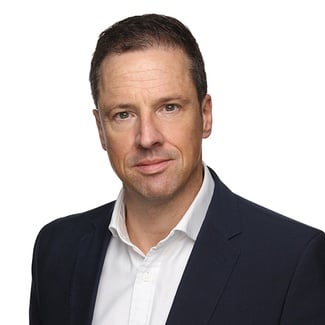
Paul Green is a portfolio manager in the Multi-Asset Solutions, EMEA team, responsible for the management of the Multi-Manager Universal funds and the CT Global Managed Portfolio Trust. He joined Columbia Threadneedle through the acquisition of BMO GAM (EMEA) in 2021, having been with BMO, via Thames River Capital, since 2007. Prior to focusing on investment management, Paul gained experience in portfolio implementation, portfolio pricing and client administration at Credit Suisse Asset Management and before that, at Rothschild Asset Management. He holds the Investment Administration Qualification (IAQ), the Investment Management Certificate (IMC), the CISI Level 6 Certificate in Private Client Investment Advice & Management and the CISI Diploma.


Adam Norris is a portfolio manager in the Multi-Asset Solutions, EMEA team responsible for the management of the Multi-Manager Universal funds and the CT Global Managed Portfolio Trust. He joined Columbia Threadneedle through the acquisition of BMO GAM (EMEA) in 2021, having previously been with BMO since 2013. Initially, he worked in product management within the firm, before moving into fund and investment company selection in 2016. He is a CFA charterholder and holds the Investment Management Certificate.
Important information: information is correct as of date of publication. Information from external sources is considered reliable but there is no guarantee as to its accuracy or completeness.
Investment risks
The value of your investments and any income from them can go down as well as up and you may not get back the original amount invested. Gearing is used for investment purposes to obtain, increase or reduce exposure to an asset, index or investment. The use of gearing can enhance returns to investors in a rising market, but if the market falls the losses may be greater.
Issued by Columbia Threadneedle Management Limited and approved for distribution 11/09/2026.
Information in this section of the Website is directed solely at persons who are located in the UK and can be categorised as retail clients. Nothing on this website is, or is intended to be, an offer, advice, or an invitation, to buy or sell any investments. Please read our full terms and conditions and the relevant Key Information Documents (“KID”) before proceeding further with any investment product referred to on this website. This website is not suitable for everyone, and if you are at all unsure whether an investment product referenced on this website will meet your individual needs, please seek advice before proceeding further with such product.