
ch
CH
Switzerland
en-CH
ch_inst_classes
inst
Institutional
en
en
Insights

What we expect from COP28 in Dubai

Representatives from more than 200 governments will gather in the shadow of the Burj Khalifa from the 30th November for the 28th round of global climate change negotiations. COP28 has been buffeted by controversy since the UAE was announced as host, with concerns that the country’s fossil fuel interests would jeopardise the meagre progress made since the Paris Agreement. Negotiations will also take place against a backdrop of fraying global consensus, with the continued fallout from Israel-Palestine, Russia-Ukraine and high inflation likely to stymie progress. 

While expectations for the talks are low, the need for progress to mitigate the most severe impacts of climate change is more apparent than ever. Over the last year we have witnessed exacerbating climate impacts globally, including extreme heat across China, India, and Europe, wildfires in Greece, Hawaii and Canada, droughts in the Mediterranean, as well as extreme rainfall and floods in the US, Libya, and India. It is virtually certain that 2023 will be the warmest year on record, with NASA already declaring summer 2023 as the hottest recorded. 

Here we explore some of the main questions ahead of the negotiations, and outline where we think progress may be made.

Sunset over a smoke pollution power station

COP28 will see the conclusion of the first global stocktake, designed to itemize what countries are doing (or failing to do) to realise the Paris Agreement commitments.

The European Union (EU) bloc has outlined the importance of ‘scaling up climate ambition to keep the 1.5C objective within reach’ in its position ahead of the negotiations – a notion shared with other negotiation blocs, and aligned with the 2015 Paris Agreement goals.

However, the first stocktake report (released on Sept 6th) concluded that the global emissions trajectory is far off the 1.5C target, with current commitments by governments – expressed in their Nationally Determined Contributions (NDCs) – tracking for about 2.4C of warming. This tension, between wanting global ambition but not wanting to materially change national contributions, could be seen in the EU’s pre-COP28 meeting, where Poland, Hungary and Italy were among the nations to block updating the EU’s climate pledge.

One potentially useful outcome from the stocktake from an investor point of view would be a push for more detail in country NDCs on transition pathways. Whilst the talk about new global goals such as tripling renewable energy capacity and doubling the rate of energy efficiency improvement is worthy, such high-level targets are uninvestable without more clarity. If NDCs included more detail on sectoral pathways, this would help investors to see whether, and how, such aspirational goals are translating into reality.

Our prediction: Whilst there will remain a huge gap to the 1.5 degree target, greater clarity on national commitments could at least help investors judge the credibility of country transition strategies.   
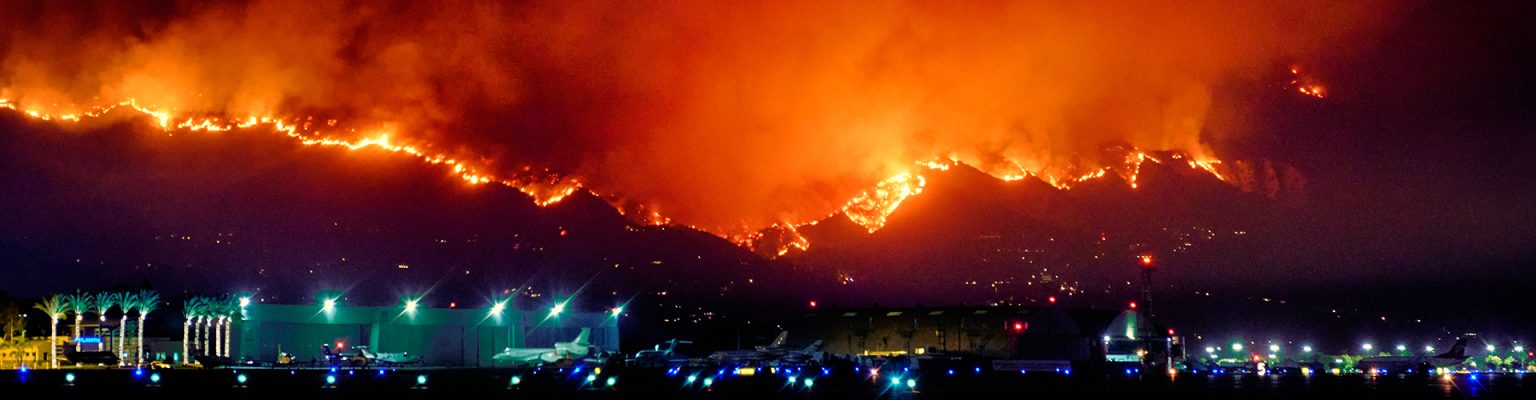
Los Angeles' largest wildfire to date, which burned more than 7,000 acres in the Verdugo Mountains area

The most celebrated outcome from CO27 in Egypt was the establishment of a “loss and damage” fund, intended to provide direct financial assistance for vulnerable nations. However, the question of where the money would come from remained open as the gavel went down in 2022.

A committee has been trying to iron out how the fund would operate but has struggled to find agreement. Some initial agreements were made in the November pre-negotiations in Abu Dhabi. Despite developing countries having strongly pushed back on the US proposals that the World Bank should manage the fund, it was agreed that the World Bank will first administer the fund, but that this will be on a temporary basis. This blueprint must now be formally adopted at COP28.

Still, much remains undecided, and a lot of work is left for the negotiating table in Dubai. The stakes are high – if loss and damage talks stall it could derail the whole conference. 

The US and EU have been keen to ensure that wealthy and high-polluting nations like Saudi Arabia and China are also on the hook to contribute. There are also major divisions over which countries would be prioritised for funding, if the fund should be voluntary in nature, how the fund’s budget will be split between different priorities, and whether the funding would be dispersed as grants or loans. In the November pre-negotiations, the US pushed back on any suggestions that developed countries will have an obligation to pay, instead advocating for it to be voluntary.  

Our prediction: There may be some minor progress, but we do not expect that a new loss and damage funding function will be fully agreed.

Trees in a forest against blue sky

A UN carbon market could theoretically be a highly cost-effective mechanism that could halve the cost of meeting countries’ climate targets, saving them $250 billion by 2030. COP27 made some limited progress on creating the rulebook and governance frameworks for global carbon markets. However, most of the thorniest issues were deferred to COP28, like how to treat emissions “removals”, whether to allow credits for “emissions avoidance” and when credits could be “revoked”.

In the build-up to COP28, the hottest area of carbon markets debate has been around whether biological and/or engineered carbon removals should be permitted. The UN Supervisory Body has generally been bullish on biological removal (e.g. storing carbon in soils and forests) and sceptical of engineered removal approaches that attempt to use chemical reactions to draw CO2 out of the air.

The last year has been a torrid time for the voluntary carbon market, with a crisis in confidence around the quality of offset projects causing carbon credit values to tumble. An array of voluntary carbon market integrity initiatives are seeking to shore up market confidence, and the COP28 Presidency has pledged to support this by making the voluntary carbon market one if its priorities.

Our prediction: We expect relatively strong negotiator consensus on carbon markets to drive continued progress.

Oil platform oil

In an unprecedented move all 27 nations in the EU bloc have agreed to negotiate for a deal to phase out the use of ‘unabated’ coal, oil, and gas (there is currently no consensus on what unabated means, but it refers to solutions that can capture and store CO2 at source). The EU has also stated that it will negotiate for a phase-out as soon as possible to fossil fuel subsides.

Unilateral support for this notion looks challenging. The African group have pointed to inequities in a global phaseout, instead arguing for a phase-out of fossil fuels in developed nations before 2030, affording developing nations the opportunity to “close the global supply gap in the short term”.

Our prediction: As at COP27, international disagreement is likely to mean that any definitive language on this point is very unlikely.

Corn field

As the impacts of climate change ramp up, the need for a clear framework and funding strategy for transborder cooperation on adaptation is more relevant than ever. Ahead of COP28 (2 Nov) UNEP released its flagship adaptation report, finding that the current “adaptation finance gap” sits at about US$194 – 366 billion per year. And, even more concerning, this gap between what is needed and what funding is available is growing every year.

Adaptation finance is also increasingly relevant to investors, as adaptation-tilted investment strategies could present investment opportunities, by serving the dual purpose of limiting future losses while delivering positive returns that can also benefit people and the planet.

This year governments are expected to finalise and approve a framework to operationalise the Global Goal on Adaptation (GGA). The Paris Agreement clearly underlines the need for cross-border cooperation on adaptation, and as a result the GGA was established in 2015. However, progress on what this could look like in practice has been sparse, with parties agreeing at COP26 and then COP27 to push finalisation of the agenda to COP28. In general terms, developing nations have favoured global targets, while some developing nations prefer looser frameworks with no binding targets.

The purpose of the GGA is to “enhance adaptive capacity, strengthen resilience and reduce vulnerability to climate change.” Negotiators must now agree on how to capture and categorize evidence on progress towards this goal, including the design of a monitoring, evaluation and learning systems for adaptation.

Our prediction: Discussions could lead to clearer goals on what adaptation should look like globally, but we expect any discussion on financing the operationalisation, or setting any financial targets, will be tense.


21 November 2023
Albertine Pegrun Haram
Albertine Pegrum-Haram
Senior Associate, Net-Zero Analyst
Joe Horrocks-Taylor
Joe Horrocks-Taylor
Vice President – Sustainable Research
Vicki Bakhshi
Vicki Bakhshi
Climate Strategist
Key topics
Related topics
Listen on Stitcher badge
Key topics
Related topics

Important information

For use by professional clients and/or equivalent investor types in your jurisdiction (not to be used with or passed on to retail clients). For marketing purposes.


This document is intended for informational purposes only and should not be considered representative of any particular investment. This should not be considered an offer or solicitation to buy or sell any securities or other financial instruments, or to provide investment advice or services. Investing involves risk including the risk of loss of principal. Your capital is at risk.  Market risk may affect a single issuer, sector of the economy, industry or the market as a whole. The value of investments is not guaranteed, and therefore an investor may not get back the amount invested. International investing involves certain risks and volatility due to potential political, economic or currency fluctuations and different financial and accounting standards. The securities included herein are for illustrative purposes only, subject to change and should not be construed as a recommendation to buy or sell. Securities discussed may or may not prove profitable. The views expressed are as of the date given, may change as market or other conditions change and may differ from views expressed by other Columbia Threadneedle Investments (Columbia Threadneedle) associates or affiliates. Actual investments or investment decisions made by Columbia Threadneedle and its affiliates, whether for its own account or on behalf of clients, may not necessarily reflect the views expressed. This information is not intended to provide investment advice and does not take into consideration individual investor circumstances. Investment decisions should always be made based on an investor’s specific financial needs, objectives, goals, time horizon and risk tolerance. Asset classes described may not be suitable for all investors. Past performance does not guarantee future results, and no forecast should be considered a guarantee either. Information and opinions provided by third parties have been obtained from sources believed to be reliable, but accuracy and completeness cannot be guaranteed. This document and its contents have not been reviewed by any regulatory authority.


In Australia: Issued by Threadneedle Investments Singapore (Pte.) Limited [“TIS”], ARBN 600 027 414.  TIS is exempt from the requirement to hold an Australian financial services licence under the Corporations Act 2001 (Cth) and relies on Class Order 03/1102 in respect of the financial services it provides to wholesale clients in Australia. This document should only be distributed in Australia to “wholesale clients” as defined in Section 761G of the Corporations Act.  TIS is regulated in Singapore (Registration number: 201101559W) by the Monetary Authority of Singapore under the Securities and Futures Act (Chapter 289), which differ from Australian laws.


In Singapore: Issued by Threadneedle Investments Singapore (Pte.) Limited, 3 Killiney Road, #07-07, Winsland House 1, Singapore 239519, which is regulated in Singapore by the Monetary Authority of Singapore under the Securities and Futures Act (Chapter 289). Registration number: 201101559W. This advertisement has not been reviewed by the Monetary Authority of Singapore.


In Hong Kong: Issued by Threadneedle Portfolio Services Hong Kong Limited 天利投資管理香港有限公司. Unit 3004, Two Exchange Square, 8 Connaught Place, Hong Kong, which is licensed by the Securities and Futures Commission (“SFC”) to conduct Type 1 regulated activities (CE:AQA779). Registered in Hong Kong under the Companies Ordinance (Chapter 622), No. 1173058.


In Japan: Issued by Columbia Threadneedle Investments Japan Co., Ltd. Financial Instruments Business Operator, The Director-General of Kanto Local Finance Bureau (FIBO) No.3281, and a member of Japan Investment Advisers Association and Type II Financial Instruments Firms Association.


In the UK: Issued by Threadneedle Asset Management Limited, No. 573204 and/or Columbia Threadneedle Management Limited, No. 517895, both registered in England and Wales and authorised and regulated in the UK by the Financial Conduct Authority.


In the EEA: Issued by Threadneedle Management Luxembourg S.A., registered with the Registre de Commerce et des Sociétés (Luxembourg), No. B 110242 and/or Columbia Threadneedle Netherlands B.V., regulated by the Dutch Authority for the Financial Markets (AFM), registered No. 08068841.


In Switzerland: Issued by Threadneedle Portfolio Services AG, an unregulated Swiss firm or Columbia Threadneedle Management (Swiss) GmbH, acting as representative office of Columbia Threadneedle Management Limited, authorised and regulated by the Swiss Financial Market Supervisory Authority (FINMA).


In the Middle East: This document is distributed by Columbia Threadneedle Investments (ME) Limited, which is regulated by the Dubai Financial Services Authority (DFSA).  For Distributors: This document is intended to provide distributors with information about Group products and services and is not for further distribution. For Institutional Clients: The information in this document is not intended as financial advice and is only intended for persons with appropriate investment knowledge and who meet the regulatory criteria to be classified as a Professional Client or Market Counterparties and no other Person should act upon it.


This document may be made available to you by an affiliated company which is part of the Columbia Threadneedle Investments group of companies: Columbia Threadneedle Management Limited in the UK; Columbia Threadneedle Netherlands B.V., regulated by the Dutch Authority for the Financial Markets (AFM), registered No. 08068841.


Columbia Threadneedle Investments is the global brand name of the Columbia and Threadneedle group of companies.

Related Insights

23 July 2026

Climate Strategist

Security, supply and the energy transition

Geopolitical shocks have reframed the energy transition as a question of security as well as climate. As governments seek more resilient, affordable energy systems, long-term investors can find opportunities in the infrastructure powering the shift.
30 June 2026

Climate Strategist

Senior Analyst, Investment grade credit

Credit Research Analyst, Fixed Income

As UK flood risk grows, who is holding the risk?

UK flood risk is rising, raising urgent questions about who ultimately bears the financial cost. We assess the implications for investment managers.
30 April 2026

Vice President, Responsible Investment

Is the world on track for a more sustainable future?

Understanding sustainability trends and the interactions between people and planet is fundamental to identifying future investment opportunities.
18 August 2026

In Credit Weekly Snapshot – If I could turn back time

The US 30-year Treasury yield is at its highest since 2001. Although the level is not extreme historically, the speed of the rise is.
18 August 2026

In Credit Weekly Snapshot – A little less conversation

The US July jobs report had plenty to say – little of it good. The economy shed 23,000 jobs versus consensus expectations for an 80,000 gain. Rates markets reacted swiftly, trimming expectations for future rate rises.
11 August 2026

Head of EMEA Client Portfolio Manager team, Fixed Income

Central banks face a global reserves paradox

Reserves are growing, but so is the reluctance to use them.
true
true

Important information

For use by professional clients and/or equivalent investor types in your jurisdiction (not to be used with or passed on to retail clients). For marketing purposes.


This document is intended for informational purposes only and should not be considered representative of any particular investment. This should not be considered an offer or solicitation to buy or sell any securities or other financial instruments, or to provide investment advice or services. Investing involves risk including the risk of loss of principal. Your capital is at risk.  Market risk may affect a single issuer, sector of the economy, industry or the market as a whole. The value of investments is not guaranteed, and therefore an investor may not get back the amount invested. International investing involves certain risks and volatility due to potential political, economic or currency fluctuations and different financial and accounting standards. The securities included herein are for illustrative purposes only, subject to change and should not be construed as a recommendation to buy or sell. Securities discussed may or may not prove profitable. The views expressed are as of the date given, may change as market or other conditions change and may differ from views expressed by other Columbia Threadneedle Investments (Columbia Threadneedle) associates or affiliates. Actual investments or investment decisions made by Columbia Threadneedle and its affiliates, whether for its own account or on behalf of clients, may not necessarily reflect the views expressed. This information is not intended to provide investment advice and does not take into consideration individual investor circumstances. Investment decisions should always be made based on an investor’s specific financial needs, objectives, goals, time horizon and risk tolerance. Asset classes described may not be suitable for all investors. Past performance does not guarantee future results, and no forecast should be considered a guarantee either. Information and opinions provided by third parties have been obtained from sources believed to be reliable, but accuracy and completeness cannot be guaranteed. This document and its contents have not been reviewed by any regulatory authority.


In Australia: Issued by Threadneedle Investments Singapore (Pte.) Limited [“TIS”], ARBN 600 027 414.  TIS is exempt from the requirement to hold an Australian financial services licence under the Corporations Act 2001 (Cth) and relies on Class Order 03/1102 in respect of the financial services it provides to wholesale clients in Australia. This document should only be distributed in Australia to “wholesale clients” as defined in Section 761G of the Corporations Act.  TIS is regulated in Singapore (Registration number: 201101559W) by the Monetary Authority of Singapore under the Securities and Futures Act (Chapter 289), which differ from Australian laws.


In Singapore: Issued by Threadneedle Investments Singapore (Pte.) Limited, 3 Killiney Road, #07-07, Winsland House 1, Singapore 239519, which is regulated in Singapore by the Monetary Authority of Singapore under the Securities and Futures Act (Chapter 289). Registration number: 201101559W. This advertisement has not been reviewed by the Monetary Authority of Singapore.


In Hong Kong: Issued by Threadneedle Portfolio Services Hong Kong Limited 天利投資管理香港有限公司. Unit 3004, Two Exchange Square, 8 Connaught Place, Hong Kong, which is licensed by the Securities and Futures Commission (“SFC”) to conduct Type 1 regulated activities (CE:AQA779). Registered in Hong Kong under the Companies Ordinance (Chapter 622), No. 1173058.


In Japan: Issued by Columbia Threadneedle Investments Japan Co., Ltd. Financial Instruments Business Operator, The Director-General of Kanto Local Finance Bureau (FIBO) No.3281, and a member of Japan Investment Advisers Association and Type II Financial Instruments Firms Association.


In the UK: Issued by Threadneedle Asset Management Limited, No. 573204 and/or Columbia Threadneedle Management Limited, No. 517895, both registered in England and Wales and authorised and regulated in the UK by the Financial Conduct Authority.


In the EEA: Issued by Threadneedle Management Luxembourg S.A., registered with the Registre de Commerce et des Sociétés (Luxembourg), No. B 110242 and/or Columbia Threadneedle Netherlands B.V., regulated by the Dutch Authority for the Financial Markets (AFM), registered No. 08068841.


In Switzerland: Issued by Threadneedle Portfolio Services AG, an unregulated Swiss firm or Columbia Threadneedle Management (Swiss) GmbH, acting as representative office of Columbia Threadneedle Management Limited, authorised and regulated by the Swiss Financial Market Supervisory Authority (FINMA).


In the Middle East: This document is distributed by Columbia Threadneedle Investments (ME) Limited, which is regulated by the Dubai Financial Services Authority (DFSA).  For Distributors: This document is intended to provide distributors with information about Group products and services and is not for further distribution. For Institutional Clients: The information in this document is not intended as financial advice and is only intended for persons with appropriate investment knowledge and who meet the regulatory criteria to be classified as a Professional Client or Market Counterparties and no other Person should act upon it.


This document may be made available to you by an affiliated company which is part of the Columbia Threadneedle Investments group of companies: Columbia Threadneedle Management Limited in the UK; Columbia Threadneedle Netherlands B.V., regulated by the Dutch Authority for the Financial Markets (AFM), registered No. 08068841.


Columbia Threadneedle Investments is the global brand name of the Columbia and Threadneedle group of companies.

You may also like

Investment approach

Teamwork defines us and is fundamental to our investment approach, which is structured to facilitate the generation, assessment and implementation of good, strong investment ideas for our portfolios.

Funds and Prices

Columbia Threadneedle Investments has a comprehensive range of investment funds catering for a broad range of objectives.

Investment Capabilities

We offer a broad range of actively managed investment strategies and solutions covering global, regional and domestic markets and asset classes.
Icon checked

Thank you. You can now visit your preference centre​ to choose which insights you would like to receive by email.

Icon checked

Thank you. You can now visit your preference centre​ to choose which insights you would like to receive by email.