

On the 6th November, the UN will open its doors for the 27th round of global climate change negotiations at Sharm El-Sheikh in Egypt. Though there is a momentous amount to be done, including closing the 1.5C emissions gap and mobilising billions of dollars in climate finance, the conference is facing rough political headwinds. The impacts of the Ukraine-Russia conflict on European energy markets have triggered a cost-of-living crisis, resulting in several countries backtracking on climate pledges by re-opening mothballed fossil fuel powerplants. This is exacerbated by the souring of China and US relations, whose bilateral pact brought much-needed momentum to COP26 in Glasgow.
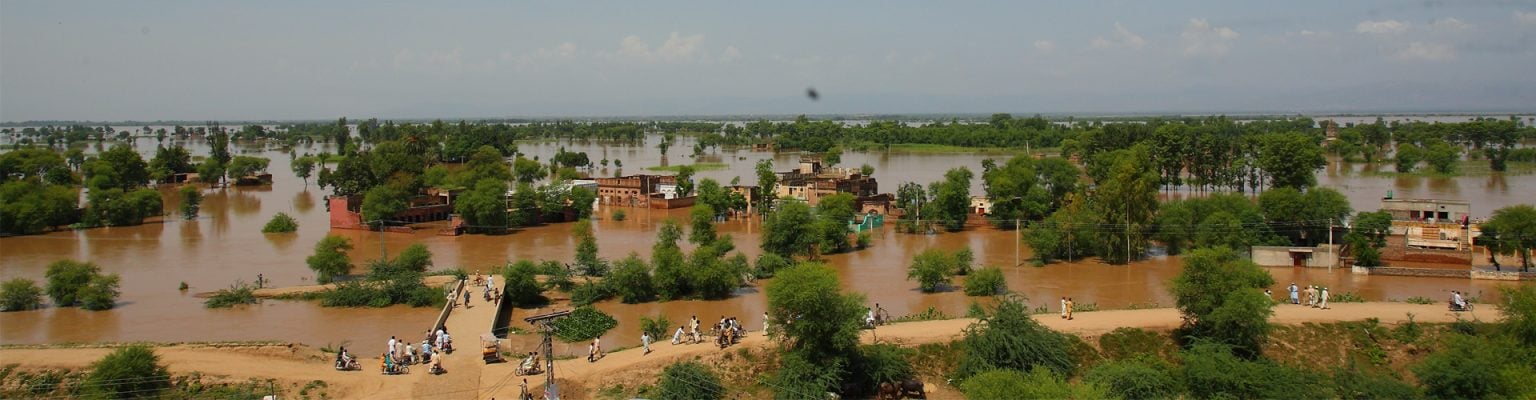
Yet, another year of climate extremes, including the most severe flooding in Pakistan’s history, wildfires burning over 600 000 hectares of land in Europe and multiple temperature records broken again, has underlined the crucial importance of making COP27 one of progress. With Africa the host continent, we can expect questions on adaptation and on compensation for damage from physical climate risk to be a major theme of discussions.
Here we outline some of the main questions ahead of the negotiations, underling where we think progress may be made.

Before COP26 in Glasgow national climate pledges put the world on track for 2.7°C of warmingi. This was reduced to 2.4°C with the new pledgesii. A mechanism was included in the final text to address the emissions gap, with countries ‘requested’ to revisit their targets by the end of 2022 – rather than, as originally envisaged, after another five-year periodiii.
Yet only 23 countries have come forward with new or updated targets (Nationally Determined Contributions, or NDCs) since COP26. A few more are expected to release updated or enhanced NDCs by the end of 2022. Encouraging enhanced NDCs has not been a priority of the host nation Egypt, which failed to submit an updated NDC in 2021 and stated that COP27 will be about “moving on from pledges to implementation” iv,v. There have been some positive moves, with India setting out decarbonisation plans for this decade, the new Australian government committing to stronger targetsvi, and other major emitters such as Mexico, Turkey and Vietnam expected to submit new NDCs later this year.
Our prediction: There may be some increase in ambition, but pledges will fall far short on closing the emissions gap.
The inequity of developing countries feeling the brunt of climate change while bearing limited responsibility for global carbon emissions has led to impassioned calls for compensation payments from wealthier countries. The question of liability for ‘loss and damage’ caused by climate change has been especially controversial at past COPs. Developing nations proposed a financial mechanism for loss and damage at COP26, but the proposal was blocked. As a compromise the “Glasgow Dialogue on Loss and Damage” was established.i Despite some progress, like Denmark committing ~13 million USD this Septemberii, developing nations argue that the Glasgow Dialogue continues a long history of promising ‘work programs’ rather than hard cash.iii
Loss and damage is not (yet) on this year’s official agenda, however, the Group of 77 (which includes host nation Egypt) and China are requesting that it be included. On the opening day of COP27 the group will set forward a new agenda item: the formation of a finance facility to compensate for loss and damages.iv The EU and the US have expressed a willingness to engage on thisv, though the US also expressed that it does not necessarily back a push for ‘new aid or funding’.vi If countries fail to agree to the new agenda item, the negotiations may derailed from the very start.
We expect that the climate events of this year, like the devastating flooding in Pakistan, droughts in China as well as the wildfires and heatwaves in Europe, will frame the debate.
Our prediction: A “loss and damage” agenda item will be approved, and it will dominate the debate. But progress will remain stalled unless developed nations agree to concrete actions, rather than more talk.

In Glasgow, richer nations agreed to provide low- and middle-income countries (LMIC) with USD 40 billion in “adaptation finance” each year from 2025. However, only USD 21.8 billion has been pledged bilaterally leaving a USD 18.2 billion adaptation finance gap.i
Several stakeholders also argue that the 40 billion is not enough. Funding is further complicated by the fact that adaptation responses, like the construction of flood defences or sea walls, are often best achieved by the public sector and should therefore come through grants. This contrasts with mitigation finance which is usually provided as loans to projects such as solar panels or wind turbines, on which investors can expect a return.ii Also, instead of the 50:50 mitigation/adaptation finance split, as advocated by the UN Secretary General, only 25% of climate finance has gone to adaptation so far.iii
Adaptation grants need to be targeted, and at COP27 developed countries are expected to specify how finance will be transferred to those who need it most, and how they are working with local communities.iv Another difficulty comes in the definitions of adaptation finance and the ways in which donations are accounted for, diverging methods of accounting has led several LMIC’s to question donor countries figures on climate finance. Many of these discussions will come under the banner of the Global Goal on Adaptation (GGA). The GGA was established under Article 7.1 of the Paris Agreement in 2015, and aims to provide a framework for operationalising adaptation solutions. Questions remain about the role of the private sector in adaptation funding – an area of debate we will be watching.
Our prediction: Calls for more adaptation finance will likely be left unheard, due to the current macroeconomic pressures.
Finance was a central theme in Glasgow and will likely continue to be so this year. Developed nations promised $100bn a year in climate finance to developing nations by 2020, but OECD calculations shows that efforts fell $17bni short and were dominated by loans, rather than the requested grant funding. Canada and Germany will present a report at COP27 which will dissect this failure and propose a way forward. xviii
Much of the blame for faltering climate finance has been pinned on international financial institutions such as the World Bank and the Green Climate Fund. The G20 initiated a review of how multilateral development banks (MDBs) could do more with their current capital structure, there are growing calls for the resignation of World Bank boss David Malpass over his chequered climate record, and the Barbados PM Mia Mottley has gained traction with her calls for a World Bank/IMF reboot to enhance access for poorer countries and provision of finance. iii While these institutions have undeniably underdelivered on their climate finance mandates, we believe more focus needs to be placed on the impediments to crowding in additional private climate finance in emerging markets.
The $8.5bn deal mobilising EU, UK and US funding to accelerate coal phase-out in South Africa was one of the headline successes of COP26. Similar deals are now in the pipeline with India, Vietnam, and Indonesia – a positive update on these bilateral financing deals could help warm up frosty relations on climate finance.iv
Our prediction: Macroeconomic concerns mean increased climate finance pledges are unlikely but attempts to enhance the climate finance output of existing international financial institutions will be widely supported.

COP26 broke the carbon market deadlock which had paralysed previous summits since the Paris Agreement in 2015. Several contentious issues were resolved at Glasgow, when a rulebook which sets out the functioning of the market was agreed upon, but many of the complex details were left to be dealt with in subsequent negotiations.
An issue that negotiations will focus on is developing a methodology for applying ‘corresponding adjustments’, which ensure that a carbon credit is not double counted by both the issuing country and the country retiring the credit. iCOP27 will also attempt to decide on the administrative infrastructure that will govern this highly complex market, the phase out of older, lower quality CDM credits, and the degree of interlinkage between international and voluntary carbon markets.
Our prediction: Talks at the Bonn interim conference were positive. We expect to see momentum from COP26 continued.