


Escalating conflict in the Middle East has heightened geopolitical tension and driven sharp swings in energy markets. With the economic impact hinging on the flow of oil, investors should remain disciplined and focus on long‑term fundamentals over fast‑moving headlines.
From an investment perspective, the central question is whether the conflict in the Middle East remains contained or evolves into a more prolonged disruption with broader global market implications. Our role is to help clients navigate those risks with discipline as this complex and rapidly evolving situation unfolds.
Oil prices and economic impact
Oil prices have shown considerable volatility as the conflict has evolved, almost doubling in price in the extreme. While such moves make for dramatic headlines, they do not always reflect the underlying economic reality.
If we assume that higher oil prices persist, the immediate effect is a rise in associated costs. This is generally interpreted as inflationary, prompting concerns that central banks might need to tighten monetary policy. However, we believe that interpretation can be misleading.
We view high oil prices less as a source of sustained inflation and more as an effective tax on the global economy. Energy demand tends to be rather inelastic. Households and businesses cannot easily do without fuel and electricity, so when energy prices rise, a greater share of income is devoted to meeting these costs. The result is a reduction in disposable income.
From a macroeconomic point of view, that dynamic is fundamentally demand-reducing rather than inflation generating. Yes, higher oil prices raise wider pricing levels in the short term, but they simultaneously dampen economic activity. For that reason, treating energy price increases purely as inflationary risks misdiagnosing the problem.
Conflict duration versus energy flow
Although the duration of the conflict does matter – particularly from a humanitarian perspective – the ultimate economic impact depends on the physical flow of energy.
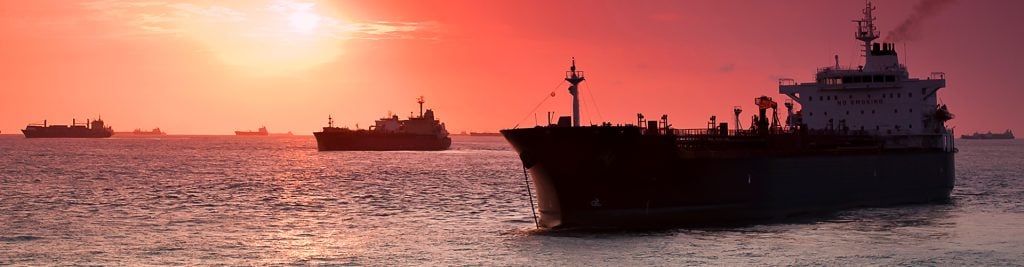
The Middle East is a critical hub in the global energy system, with the Strait of Hormuz acting as a chokepoint for exports from the region. Approximately 20% of global crude, refined products, and liquefied natural gas moves through the strait.
The global economy can tolerate a great deal of geopolitical tension provided that this oil continues to reach international markets. If it does, we may experience higher prices and some volatility, but the broader impact could remain manageable. Alternative export routes, such as through the Red Sea, may also help alleviate pressure.
However, if oil flows are contained or restricted, the situation will look vastly different. In that scenario the economic impact would be far more pronounced. In macroeconomic terms the resulting environment would likely resemble stagflation: higher price levels driven by energy costs combined with weaker economic activity.
Such a combination complicates the task of central banks and could weigh on prices. Ultimately, it could see central banks adopt a more cautious approach, waiting to assess whether energy price increases are temporary or persistent before making significant policy adjustments.
And lastly, despite initial fears that Chinese growth would be severely impacted by tariffs, so far, we have not seen the anticipated detrimental effect. Moreover, President Xi’s willingness to engage with the private sector, recognising its essential role in China’s economic growth, has led to a recovery in the country’s markets. This development underscores the importance of staying attuned to geopolitical dynamics and their economic implications.
Market behaviour and evidence of divergence
Financial markets have so far responded with a degree of resilience. At the aggregate level, major asset classes – outside commodities and energy – have not experienced dramatic dislocation. Beneath the surface, however, there has been divergence.
Within equity markets, for example, different sectors have been influenced by separate forces. Energy companies have benefited from higher oil prices, while a sector such as software has been impacted by structural themes such as the rise of artificial intelligence.
Similarly, fixed income markets have remained relatively stable overall, but there have been pockets of volatility. Credit spreads have widened modestly, and certain segments of credit are showing greater sensitivity than before. In parts of private credit and other less liquid markets we are beginning to observe signs of stress.
None of these developments are solely attributable to geopolitics, but they illustrate that markets may be entering a more complex and fragile phase where differentiation becomes more important.
Maintaining discipline
Periods of geopolitical tension often encourage reactive decision making. Headlines change rapidly, market sentiment swings, and investors can reposition portfolios in response to short-term developments, only to reverse those decisions when the situation changes again.
Our experience suggests such short-term reactions rarely produce good outcomes.
Instead, we concentrate on the medium- to long-term outlook and on the areas where we have strongest conviction. Our positioning already reflected a degree of caution even before the current conflict. For example, valuations in parts of credit markets had appeared stretched for some time and broader risks – including leverage within government balance sheets, evolving dynamics within credit markets and structural technological changes – were already evident.
As such we have preferred stronger credits over weaker issuers and have maintained a relatively conservative stance within portfolios. However, where we have clear conviction, we are prepared to express it in portfolios. And where uncertainty dominates, we seek to protect portfolios from inadvertent risk.
Navigating an era of geopolitical volatility
A reality investors must confront is that geopolitical risk is becoming a more persistent feature of the global investment environment.
In recent years markets have repeatedly confronted geopolitical events – from trade tensions to conflicts. In many cases the worst fears of investors have not materialised and markets have subsequently recovered. This experience serves as an important reminder: It is rarely wise to extrapolate the most negative outcome from events that are still unfolding.
At the same time, it would be complacent to assume that geopolitical shocks will always prove temporary. At some point an event may have more persistent economic impact. The challenge for investors is that it is rarely obvious which event will prove to be the decisive one.
This reality reinforces the importance of discipline, diversification and conviction.
The bottom line
Ultimately, markets will continue to react to developments in the Middle East, particularly through the lens of energy supply. The longevity of the conflict remains uncertain, and the situation will continue to evolve.
However, the single most important economic variable remains clear – whether oil can continue to flow out of the Gulf. If it does, the global economy may face higher prices and greater uncertainty, but it will likely absorb the shock. If it does not, the implications become significantly more serious.
For investors the appropriate response is not to chase each headline and market movement, but to remain focussed on the fundamentals, maintain discipline in portfolio construction, and act decisively where conviction is strongest. That is the approach we continue to take at Columbia Threadneedle Investments.