A key conclusion for us was that where electrification is possible it will be the dominant technology, and that hydrogen will help fill some of the carbon-intensive gaps that electrification cannot reach. Key areas of opportunity in our view are fertilisers, long-term seasonal energy storage and heavy-duty trucks.
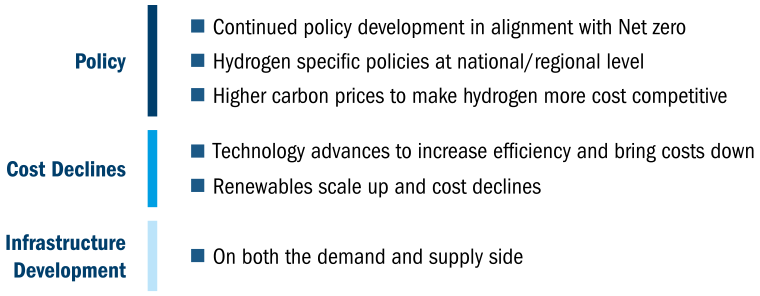
Figure 1: catalysts for conversion to hydrogen
More countries are adopting hydrogen strategies, with recent examples being the EU, the US and China, and the global energy crisis has further bolstered momentum for the fuel.
The US has the most aggressive long-term target to reduce hydrogen cost production down to $2kg/ by 2025 and $1/kg by 20301. This commitment has been demonstrated by the introduction of the Inflation Reduction Act (IRA), which we think represents a game-changer for the development of green hydrogen (see the article “US Inflation Reduction Act: a clear force to accelerate energy transition technologies” elsewhere in this report). The IRA2, passed in August, includes a $3/kg tax credit for green hydrogen, which could effectively bring the cost down to the target and make it cost-competitive with grey (hydrogen produced with natural gas) and blue (grey with carbon capture) earlier than expected. In addition, a hydrogen project can benefit from tax credits applicable to other renewables – investment tax credits and production tax credits for solar and wind, for example – thus potentially resulting in a meaningful total tax support for a full hydrogen project.
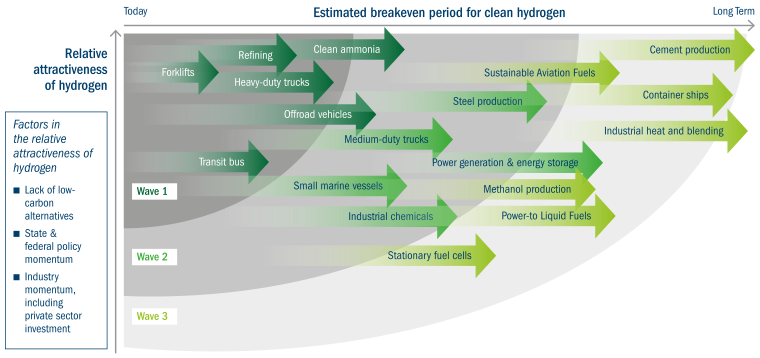
In September, the US Department of Energy (DOE) released a draft of its Hydrogen Strategy and Roadmap3 under which $9.5 billion will be deployed, mostly to develop hydrogen hubs and regional networks. The strategy reflects the adoption of hydrogen by different industrial segments in waves over the next few decades: the first will include oil refining, ammonia production and heavy transport by 2030; the second will be applications such as steel making, sustainable aviation and shipping, which we view as sensible given the different level of complexity required to make hydrogen scalable and commercially available across sectors; and finally the third wave which will include container ships and cement production (Figure 2).
Figure 2: hydrogen adoption projections
Source: US Department of Energy, Draft Hydrogen Strategy, 2022
In the EU, the European Commission presented its Repower Package4 in March, designed to ensure energy independence and security from Russia. The plan also includes substantial support for green hydrogen and an increase in its hydrogen capacity targets by four times. The most important element is the proposal of hydrogen-specific contracts for difference (CfD), which will provide subsidies worth 100% of the additional cost of using green hydrogen over fossil fuel alternatives. This should enable more hydrogen producers to make a final investment decision by 2023 when the next round of contracts are available.
Furthermore, the EU announced funding amounting to €5.2 billion for an array of hydrogen infrastructure projects which will involve the construction of large-scale electrolysers and production, storage and transport infrastructure, as well as plans for a €3 billion Hydrogen Bank5 intended to “guarantee” purchases of hydrogen to create certainty of demand.
All these policies represent major support for the development of hydrogen. We think the key milestone to look out for is rules for faster permitting for renewables, because in order to scale hydrogen a major increase and acceleration in renewable capacity will be needed.
We note, however, that policies in the EU and the US are focusing mainly on the supply side, and there is still not enough policy for creating hydrogen demand which is critical for project developers to secure financing. We think more regulatory initiatives such as creating mandates, imposing quotas and proposing incentives for end-use sectors are needed to bolster the adoption of green hydrogen.
China also released its Hydrogen Industry Development Plan this year. The country represents 30% of global hydrogen demand6 and as such could have a powerful impact on the development of hydrogen projects in the coming decade, particularly in electrolysers and fuel cells given its current domination of those sectors.
The cost of producing green hydrogen is mainly driven by the cost of electricity (accounting for around 70% of the total cost) and of electrolysers (around 30%)7. Both these inputs are on a downward trend: the cost of renewable energy has declined substantially, with solar down 80% and wind down 60% versus 20108, which has lowered operating expenses; and electrolysers continue to become cheaper, lowering the capital expenditure needs for green hydrogen.
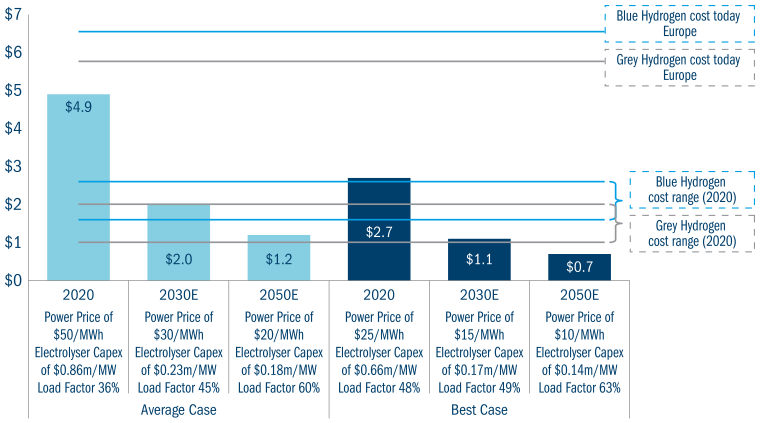
Data from BNEF (Bloomberg New Energy Finance), a strategic research provider on the future of the energy economy, shows that unsubsidised green hydrogen costs declined from $4.5/kg in 2019 to $3.81/kg in 2022, and predicted further declines to $1.15/kg in 20309.
The International Energy Agency (IEA) estimates that costs for electrolysers could fall substantially, achieving learning rates between 7% and 18%. Given the current pipeline of projects, this could reduce the capital cost of electrolysers by around 70% by 2030. Combined with the expected drop in the cost of renewable energy, this could bring the cost of hydrogen to around $1.3-$4.5/kg, with regions with good access to renewable energy – for example, southern Europe, the Middle East and Australia – at the lower end of this estimate10.
Where does this leave blue hydrogen? Low emission hydrogen production coupled with carbon capture usage and storage (CCUS) is increasing in Europe, particularly in the UK and the Netherlands. However, the competitiveness of blue hydrogen hinges on the availability of relatively low-cost gas, which is currently challenged by high prices in the EU (Figure 3).
Figure 3: levelised cost of hydrogen ($/kg hydrogen) – average and best-case scenario
Source: Bernstein, Hydrogen Highway, June 2022
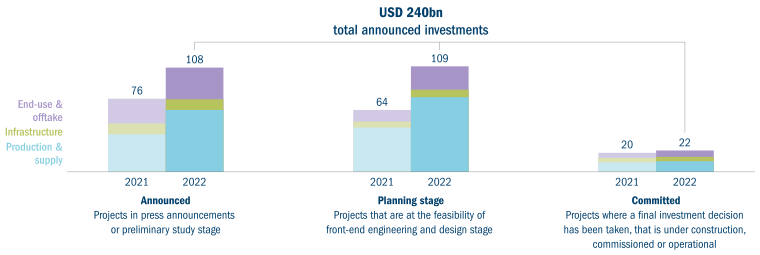
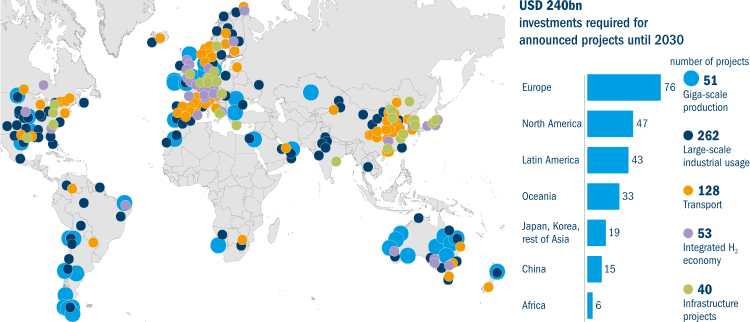
The pipeline of hydrogen projects continues to grow, but actual deployment is lagging. So far, 680 large-scale project proposals worth $240 billion have been put forward, but only about 10% have reached a final investment decision, according to the Hydrogen Council12 (Figure 4).
Figure 4: hydrogen pipeline projects
Source: Hydrogen Council, 2022
Source: Hydrogen Council, 2022
On the other hand, we think fertilisers could become a sector adding demand for hydrogen in the future. With the price of fertilisers heavily influenced by the price of gas, and with Ukraine and Russia being key producers14, the cost of these inputs has rocketed this year, highlighting the need for more diversified production.
An illustration of this potential trend is a recently announced partnership between Total Energies and Adani who will manufacture green hydrogen in India for use in fertilisers15, among other things. With India being one of the top fertiliser importers, this partnership takes advantage of a clear opportunity for green hydrogen.
Since last year there have been a number of policies implemented to accelerate the development of green hydrogen, and we see this regulatory support as the most important catalyst to accelerate this market over the coming years. But despite this positive progress and strong momentum there remain challenges and hurdles to overcome.
In addition, the energy crisis has made green hydrogen the cheapest option versus fossil fuel alternatives in many places. This, coupled with expected rapid cost declines fueled by innovation and scale coming from electrolysers and renewables, have improved the cost competitiveness of green hydrogen hugely. The expectation of lower costs might reduce demand for hydrogen as end-users could decide to wait a few years until prices become more competitive. This could be offset by the need to deliver on companies’ net zero targets, particularly in the EU where there is higher scrutiny by investors and consumers on this front. Nevertheless, this lack of demand visibility is often mentioned as a key barrier that project developers face in unlocking the long-term funding for long-term hydrogen projects.
We see the failure to adopt policies that encourage demand, particularly in key industrial sectors, as a weakness that must be overcome if we are to stimulate the necessary investments in infrastructure and innovation to scale and make green hydrogen commercially available.